

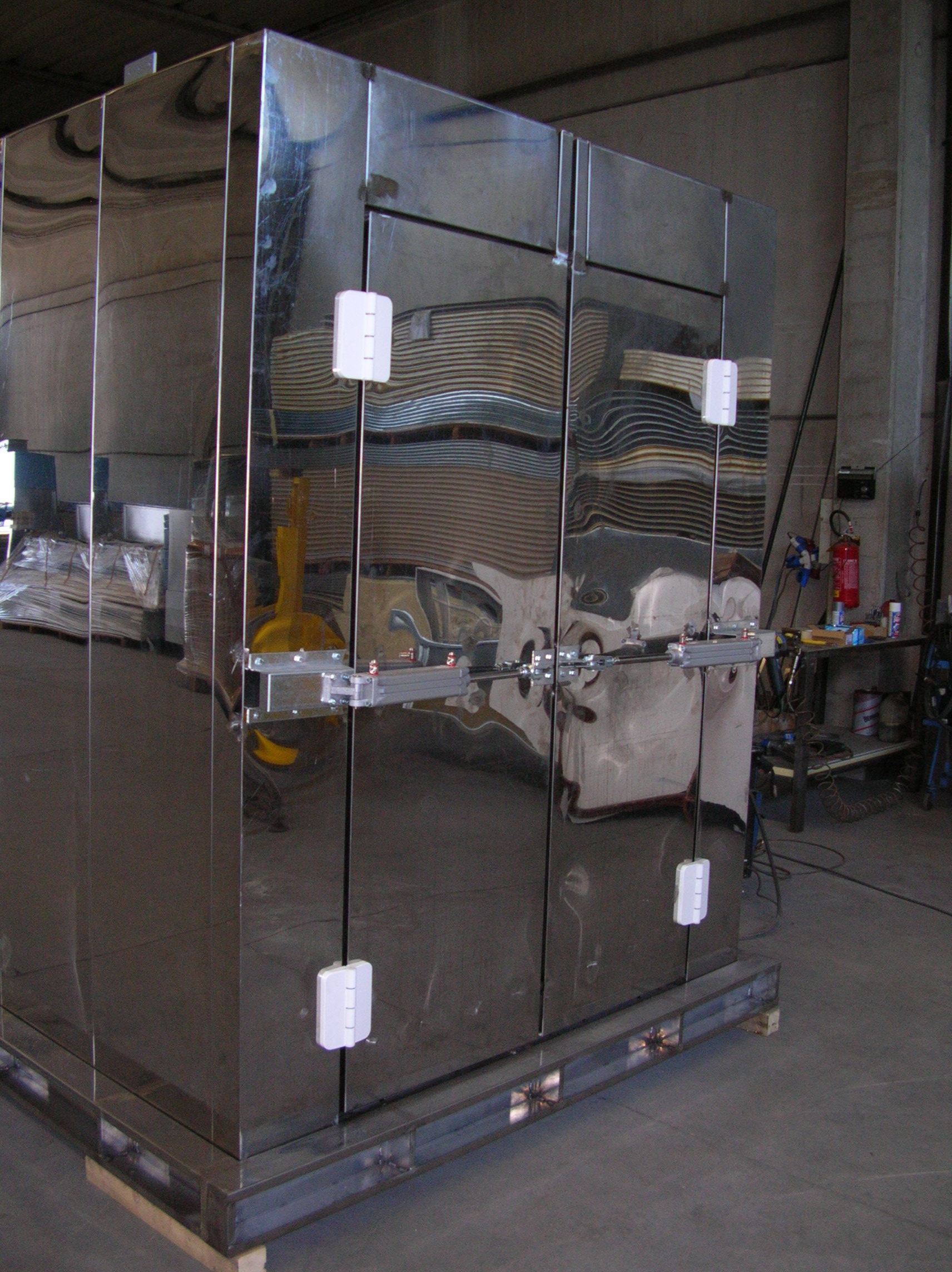
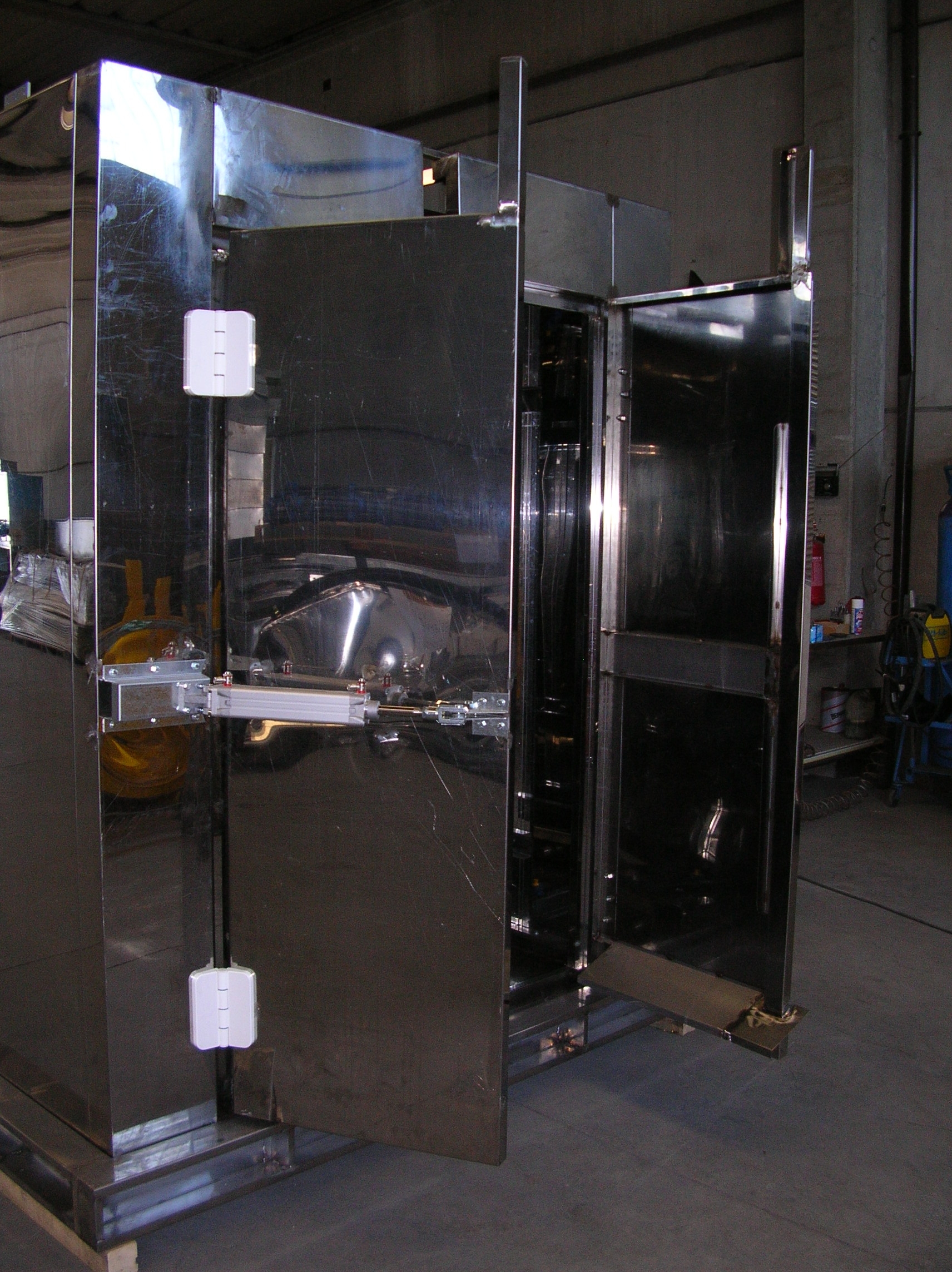
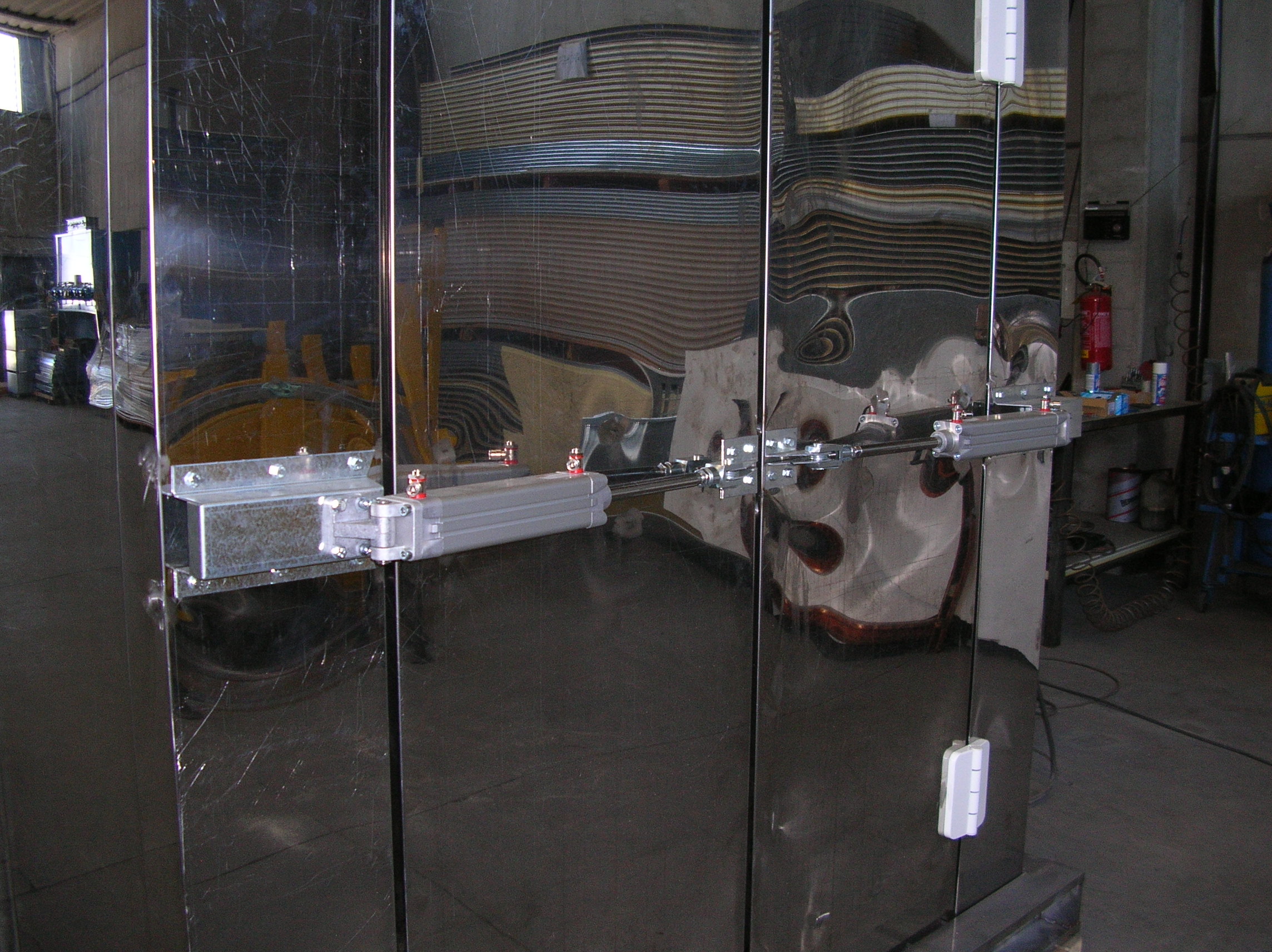
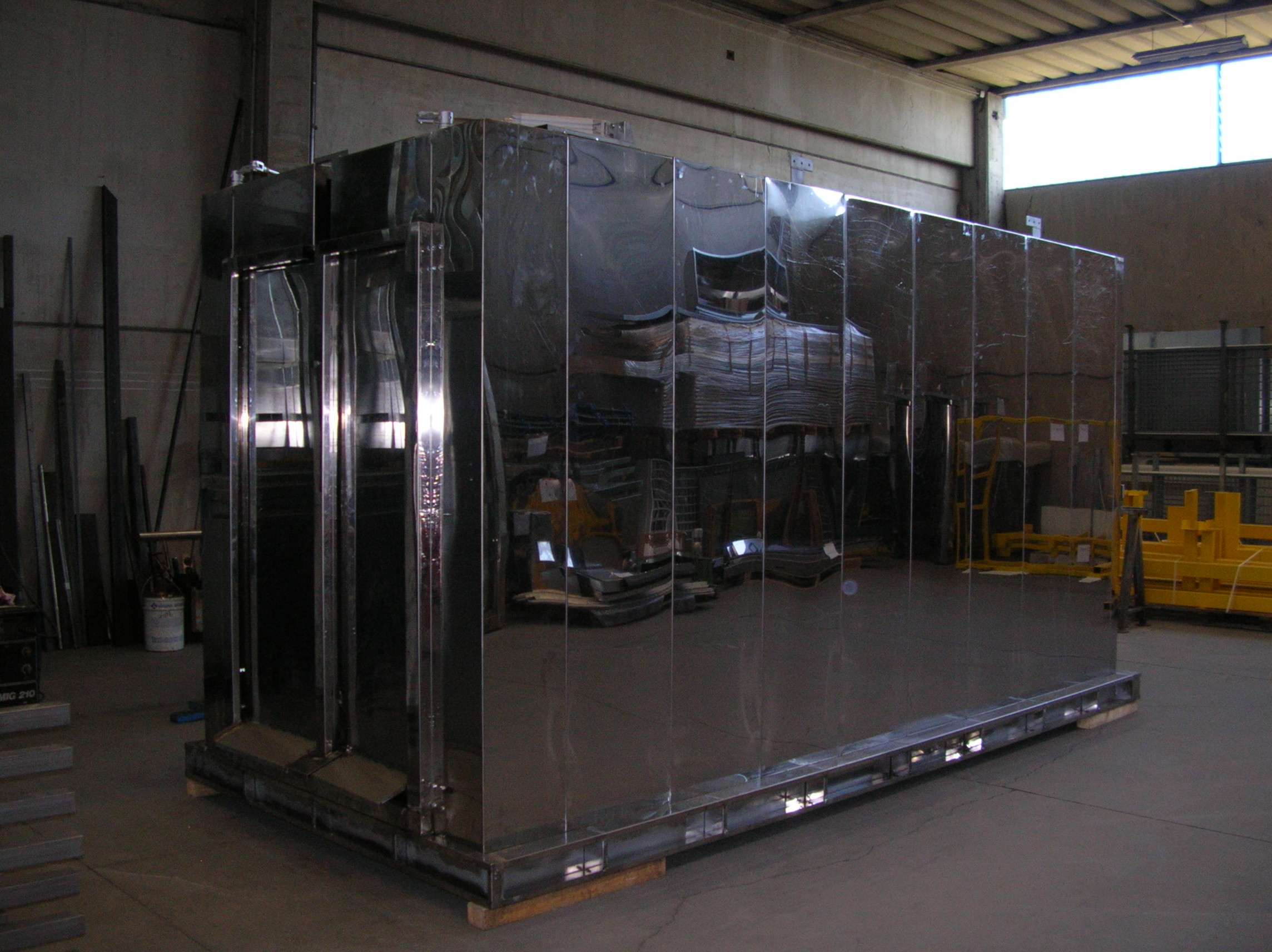
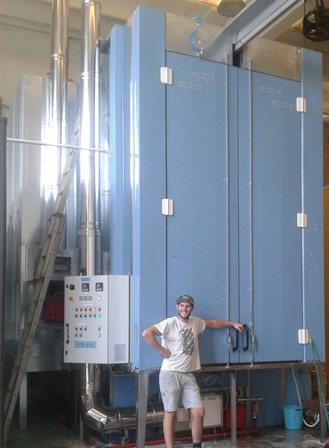
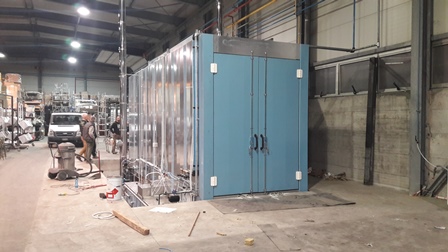
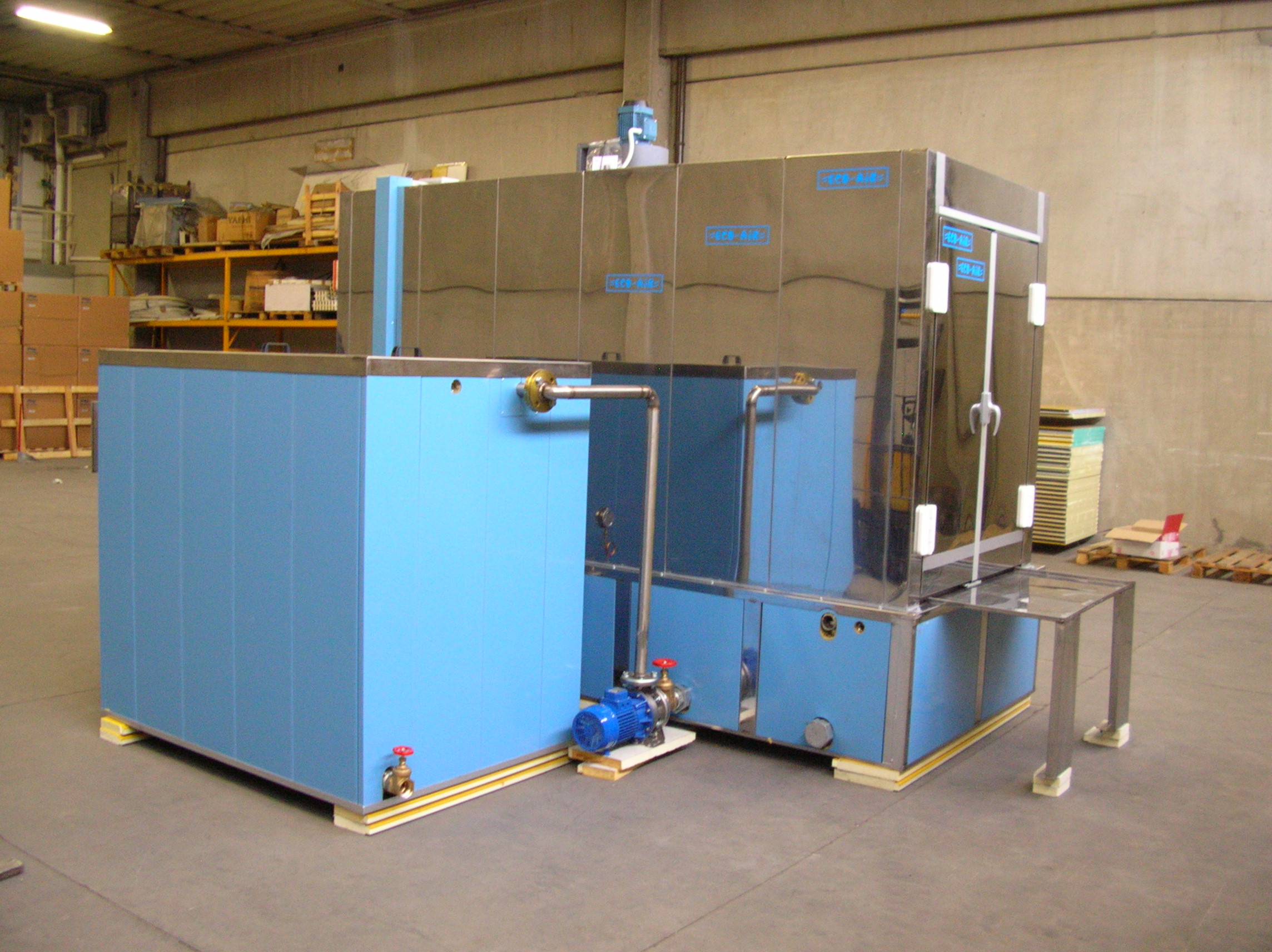
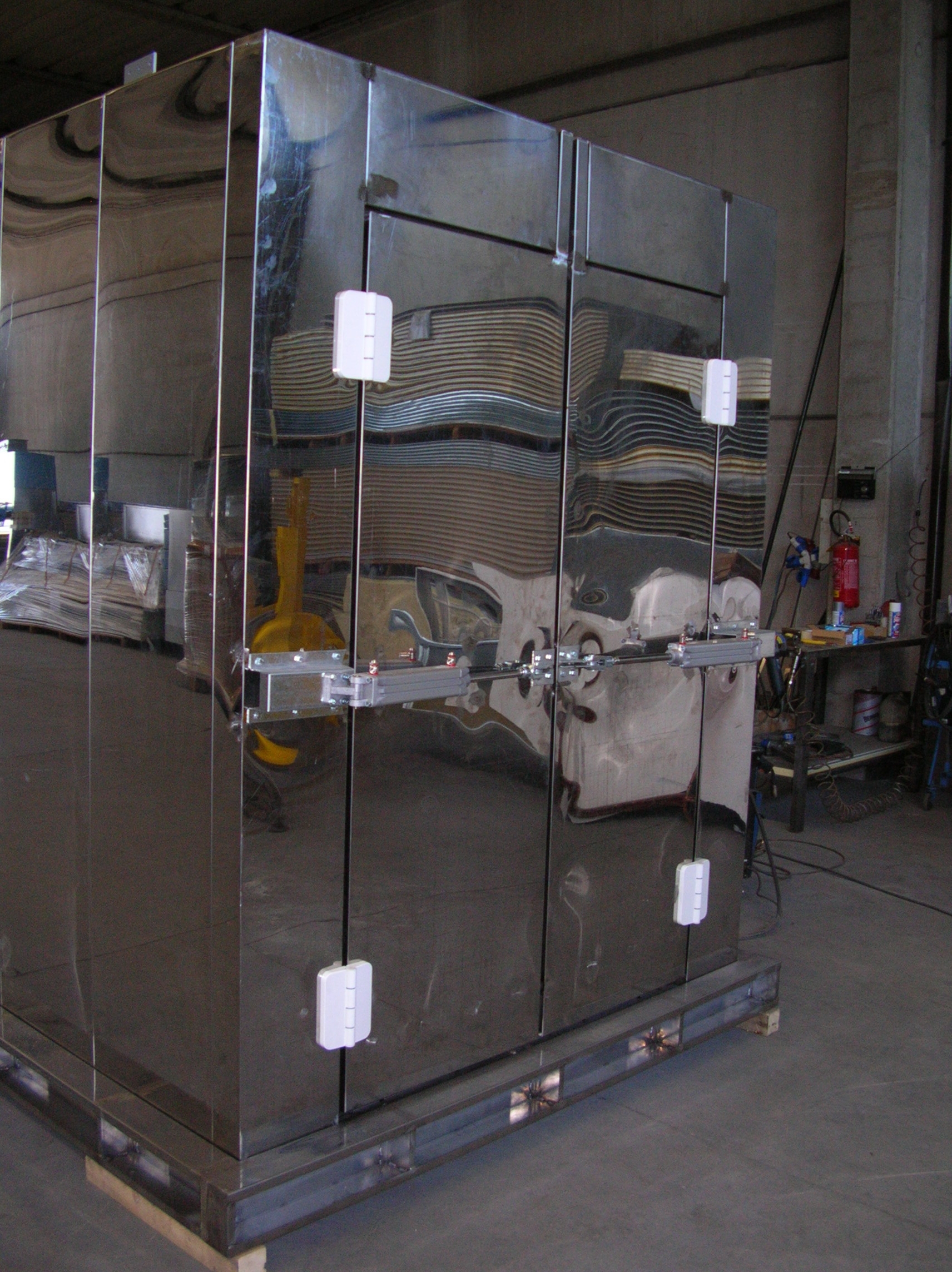
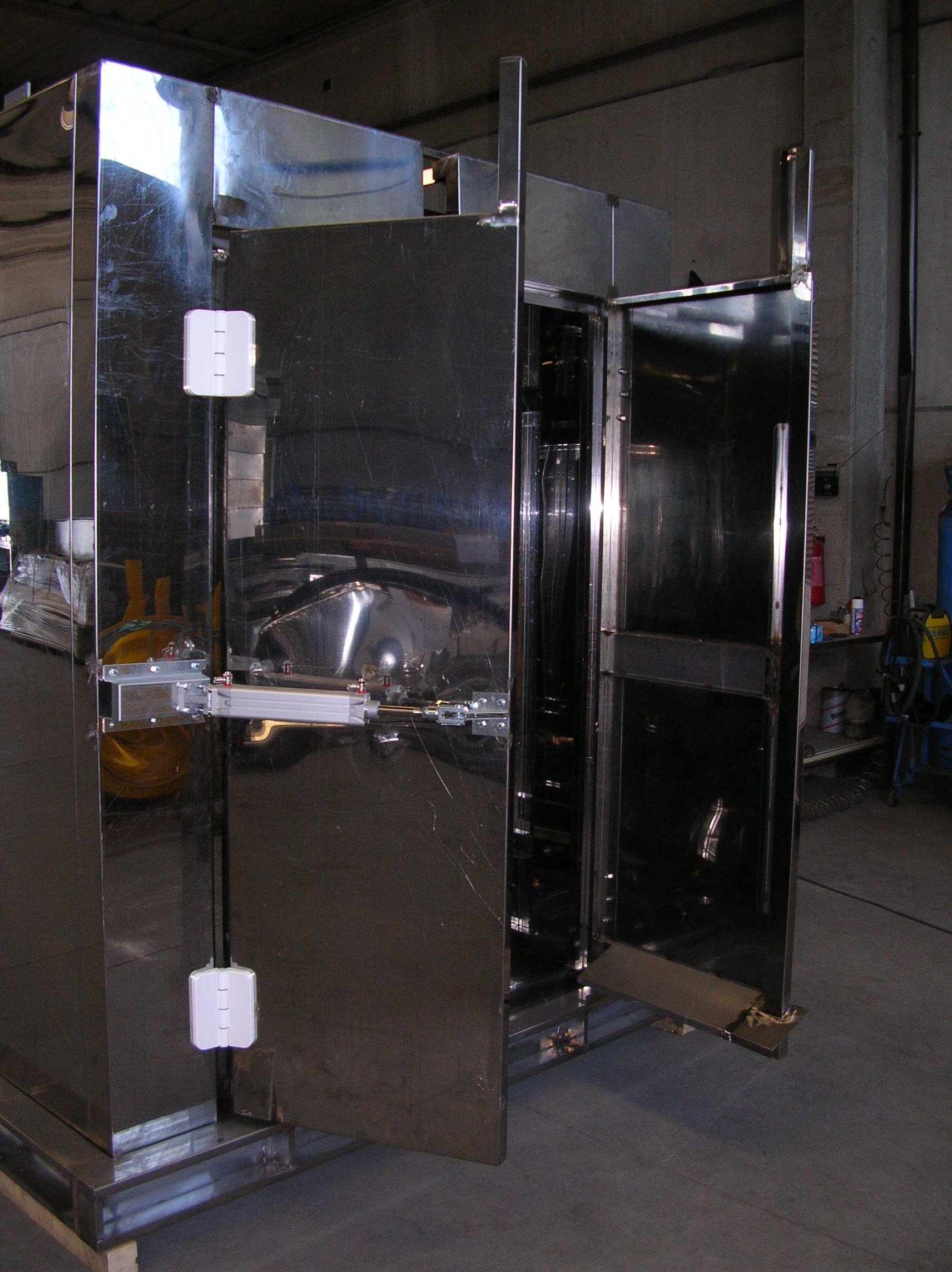
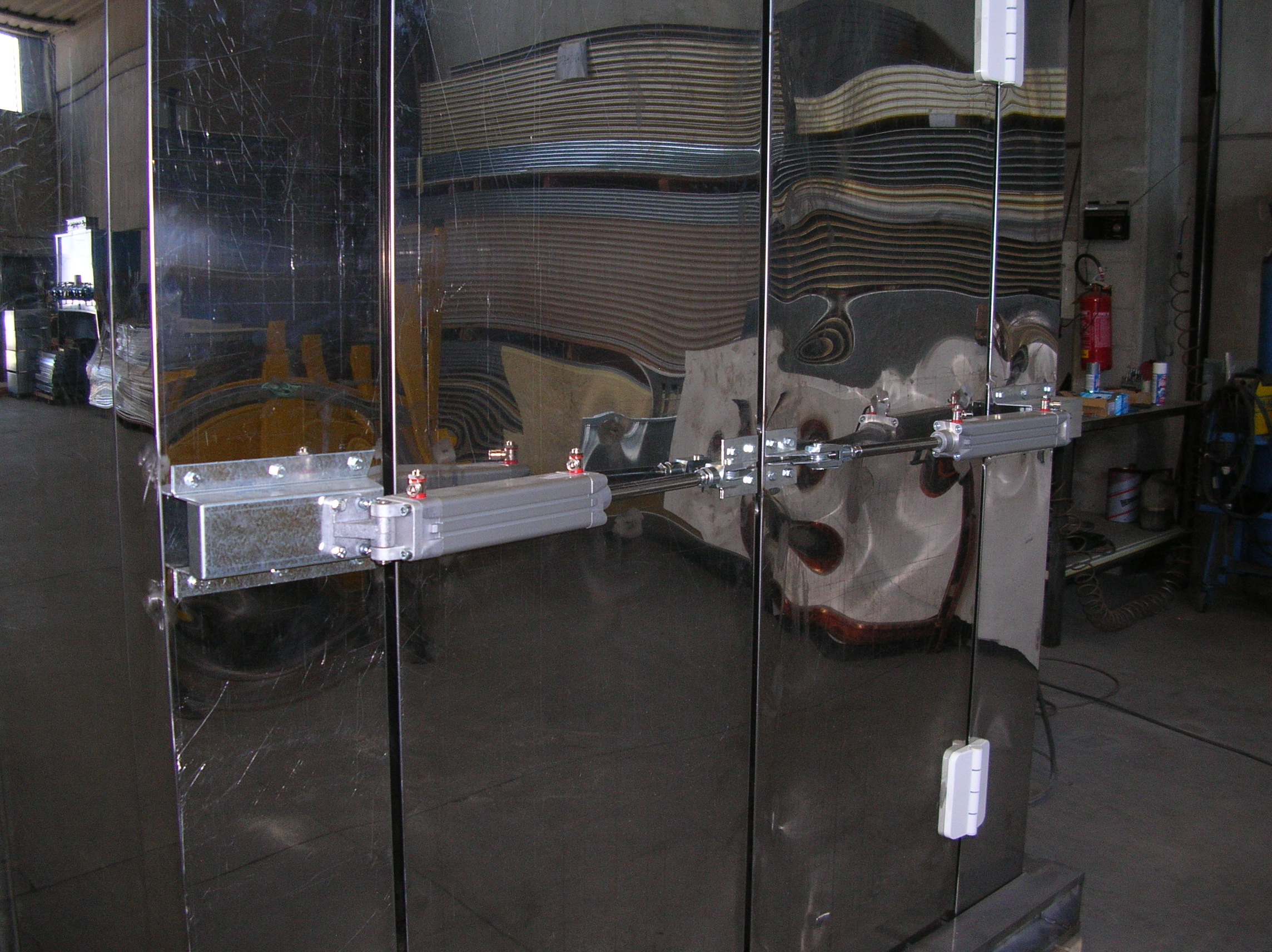
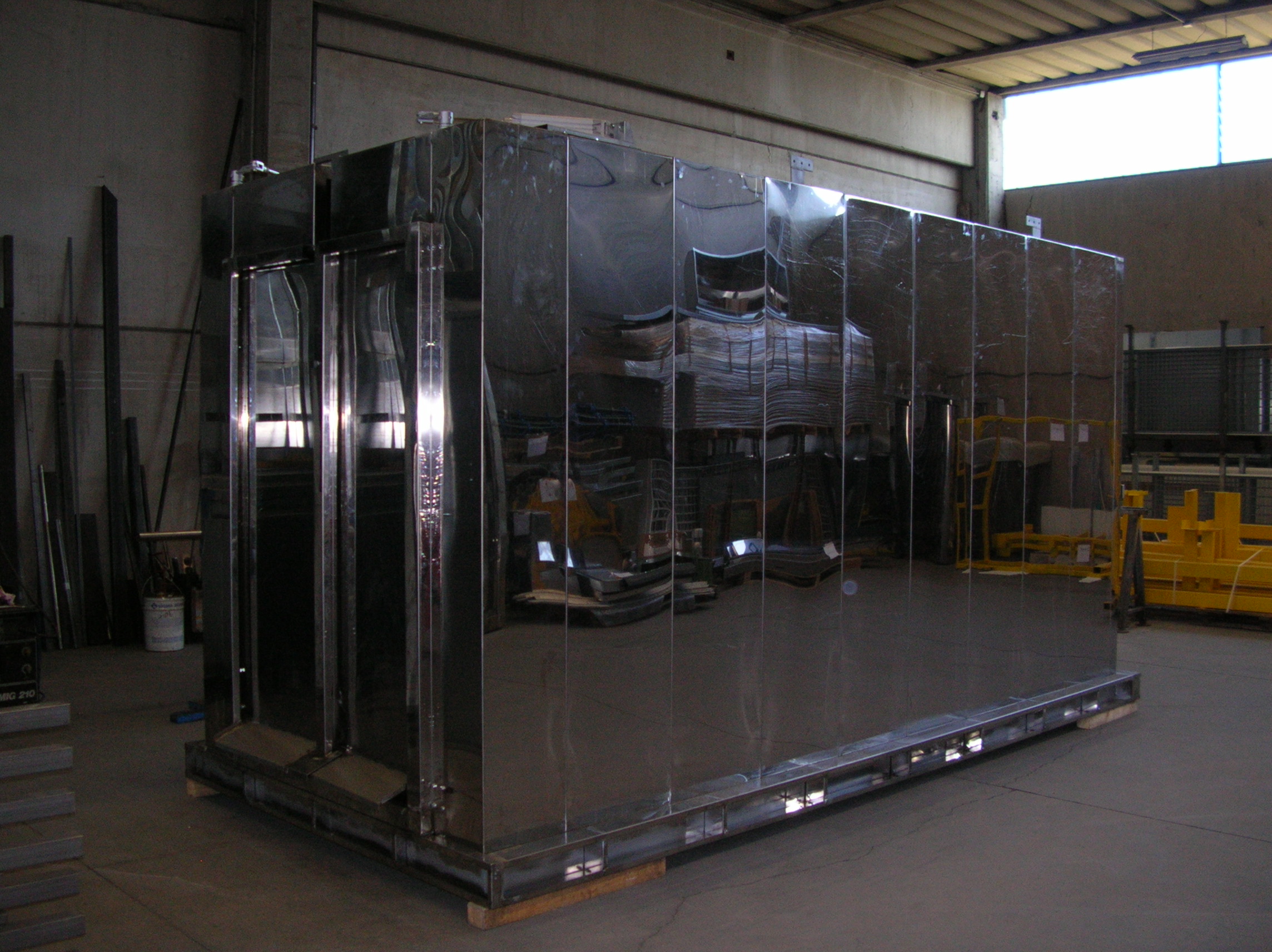
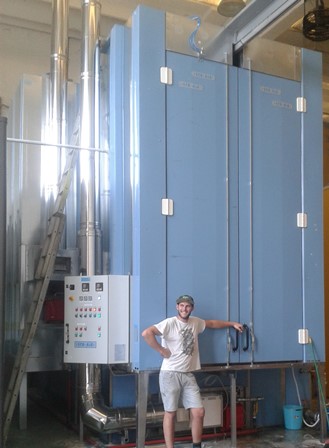
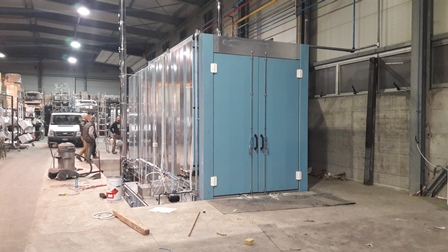
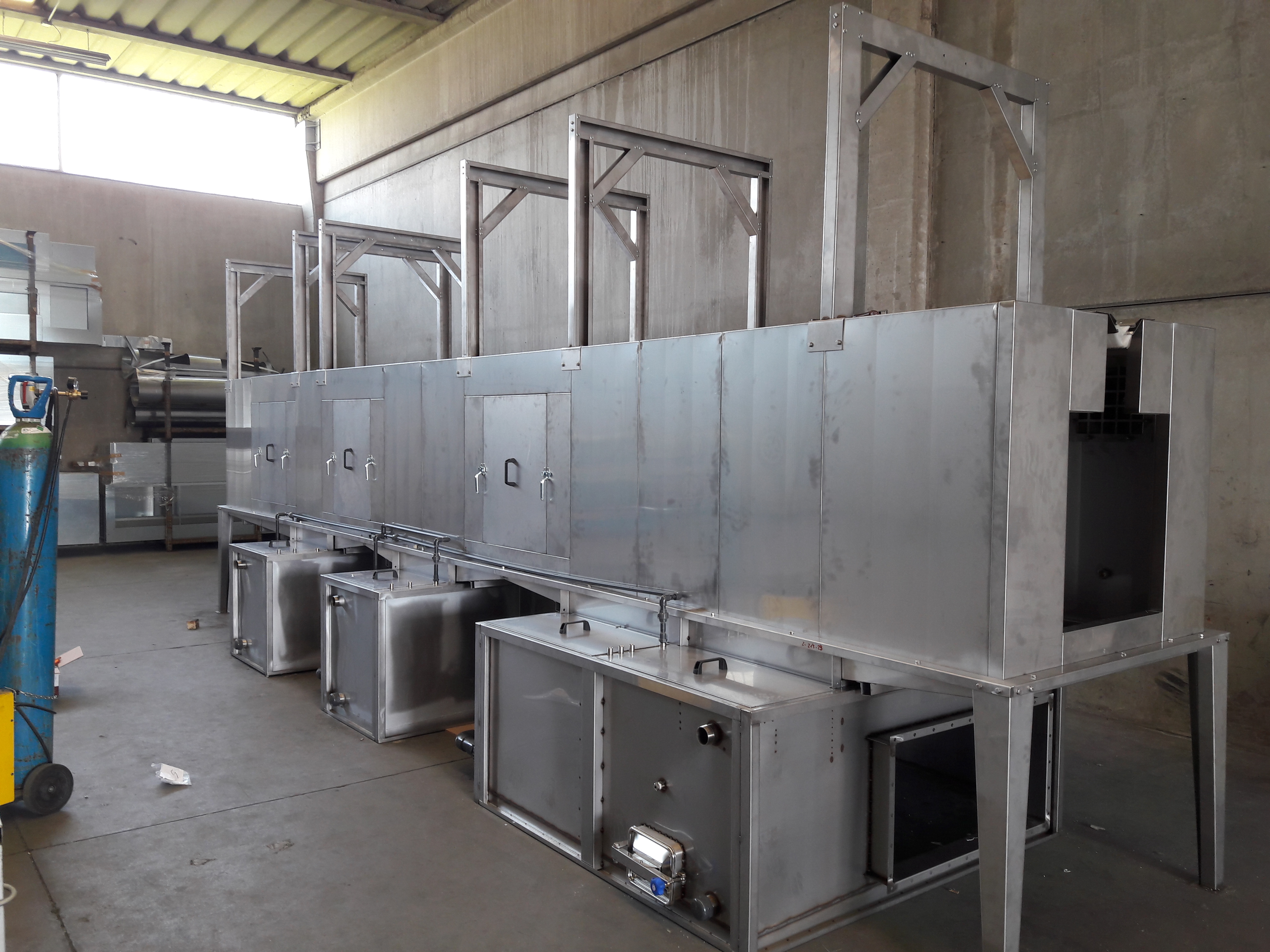
Pretreatment tunnel
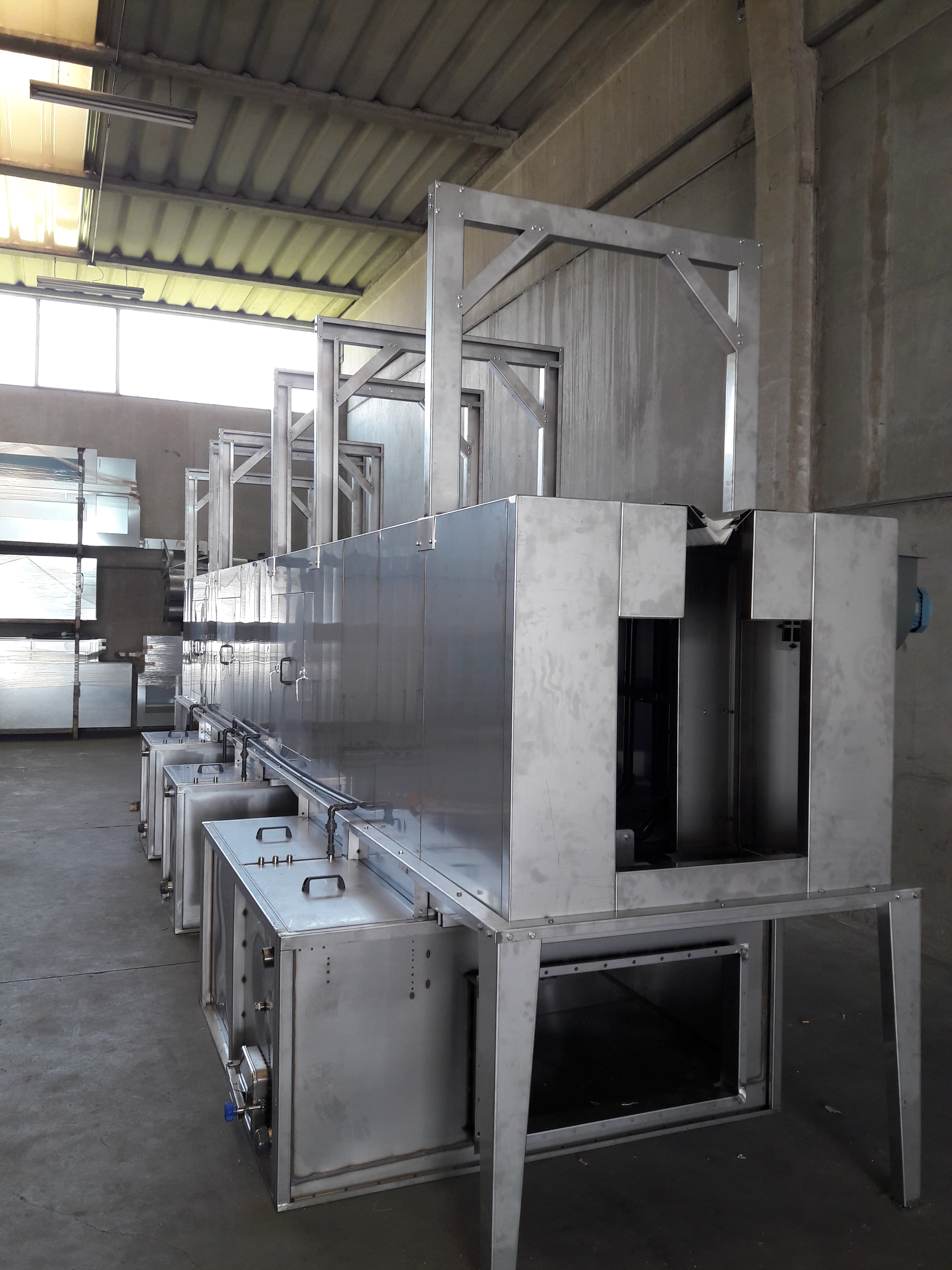
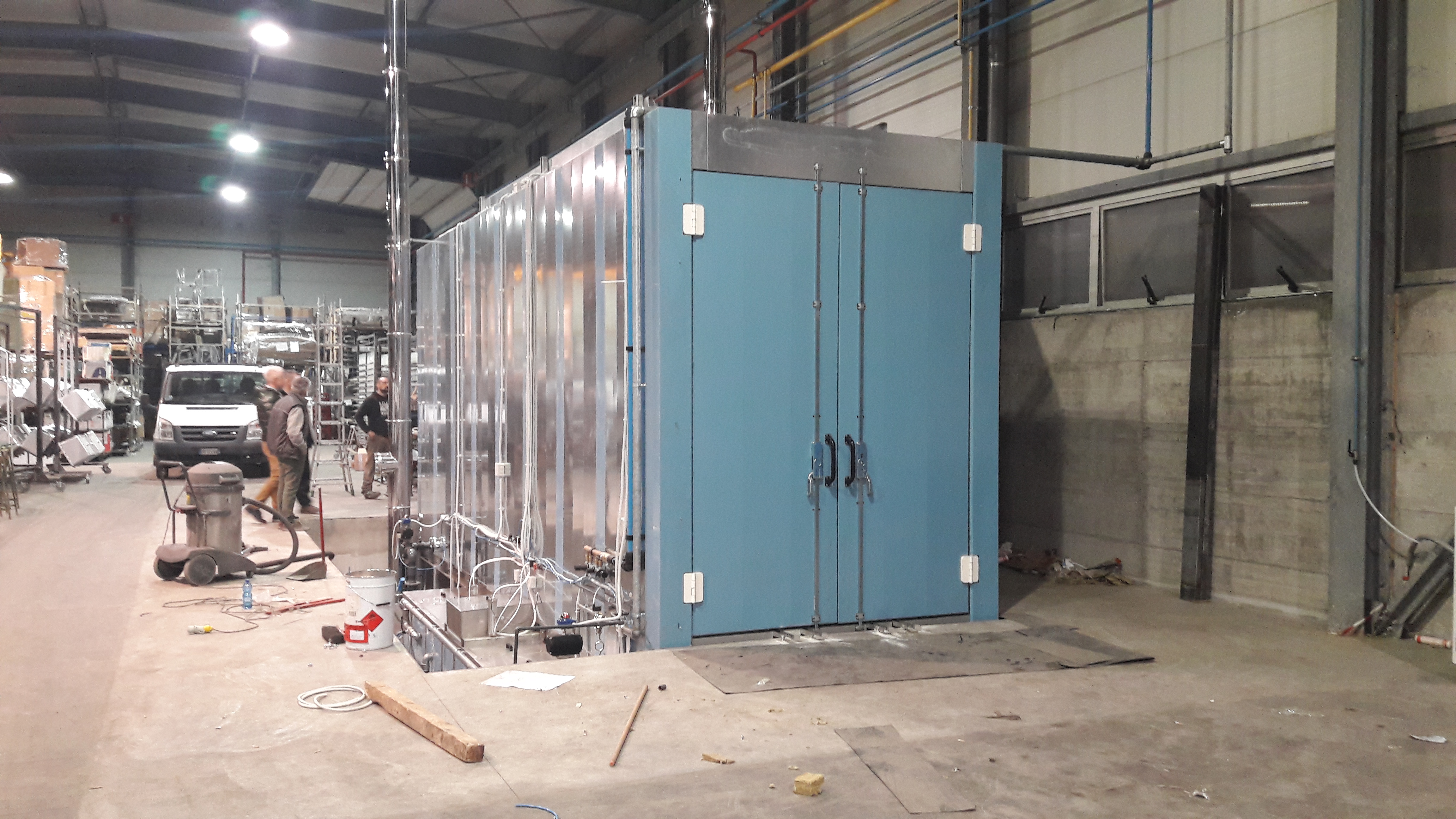
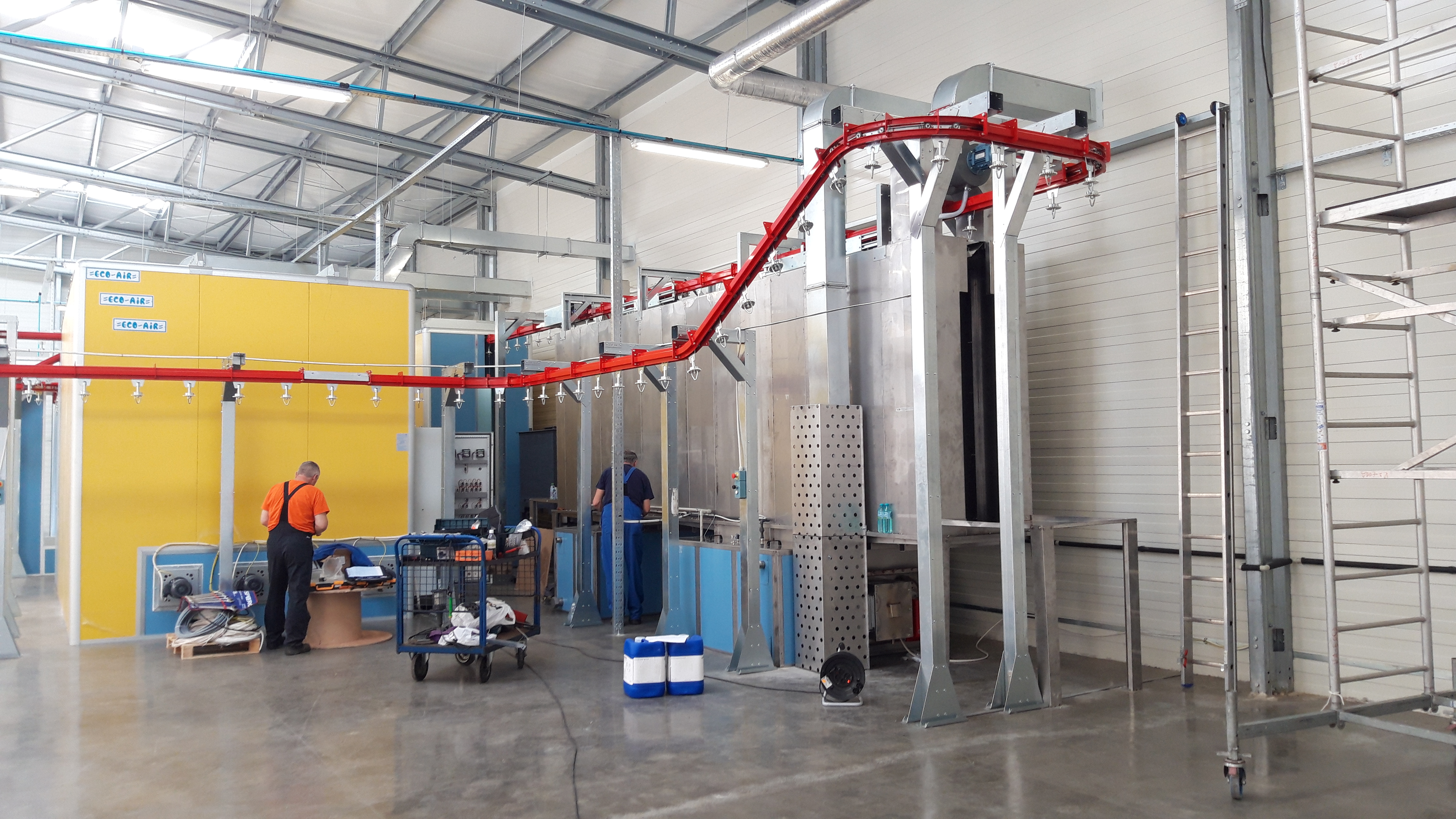
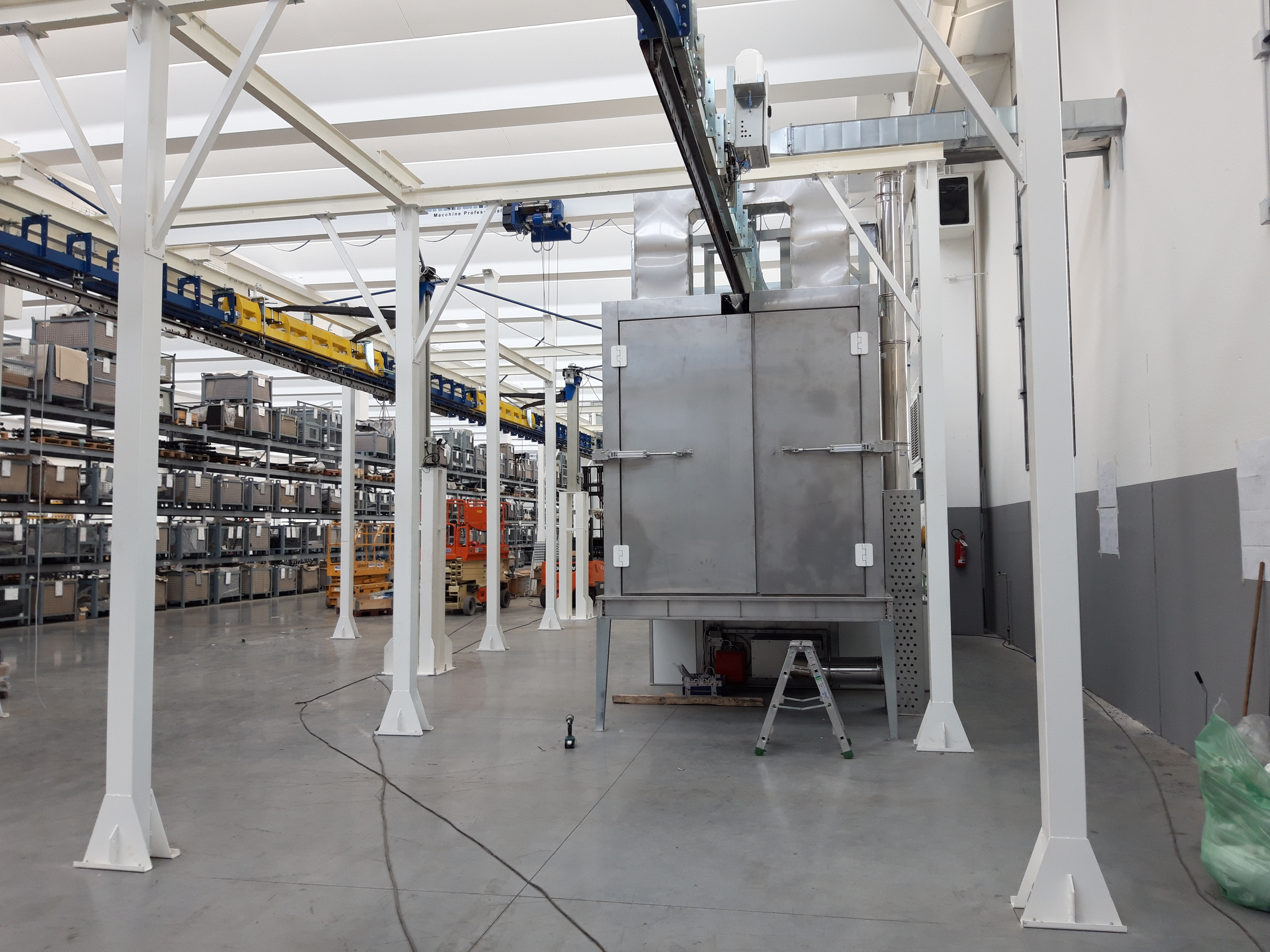
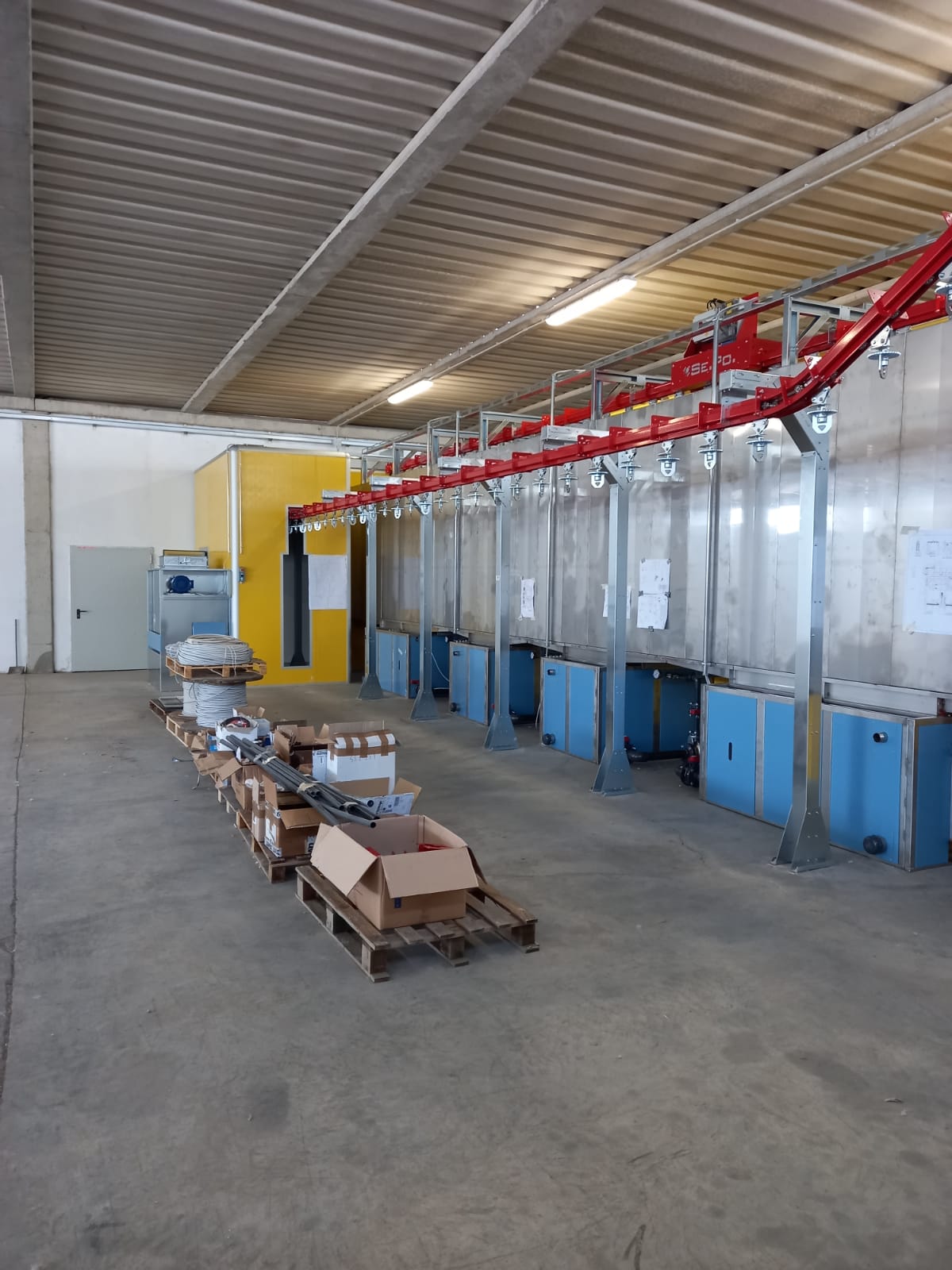
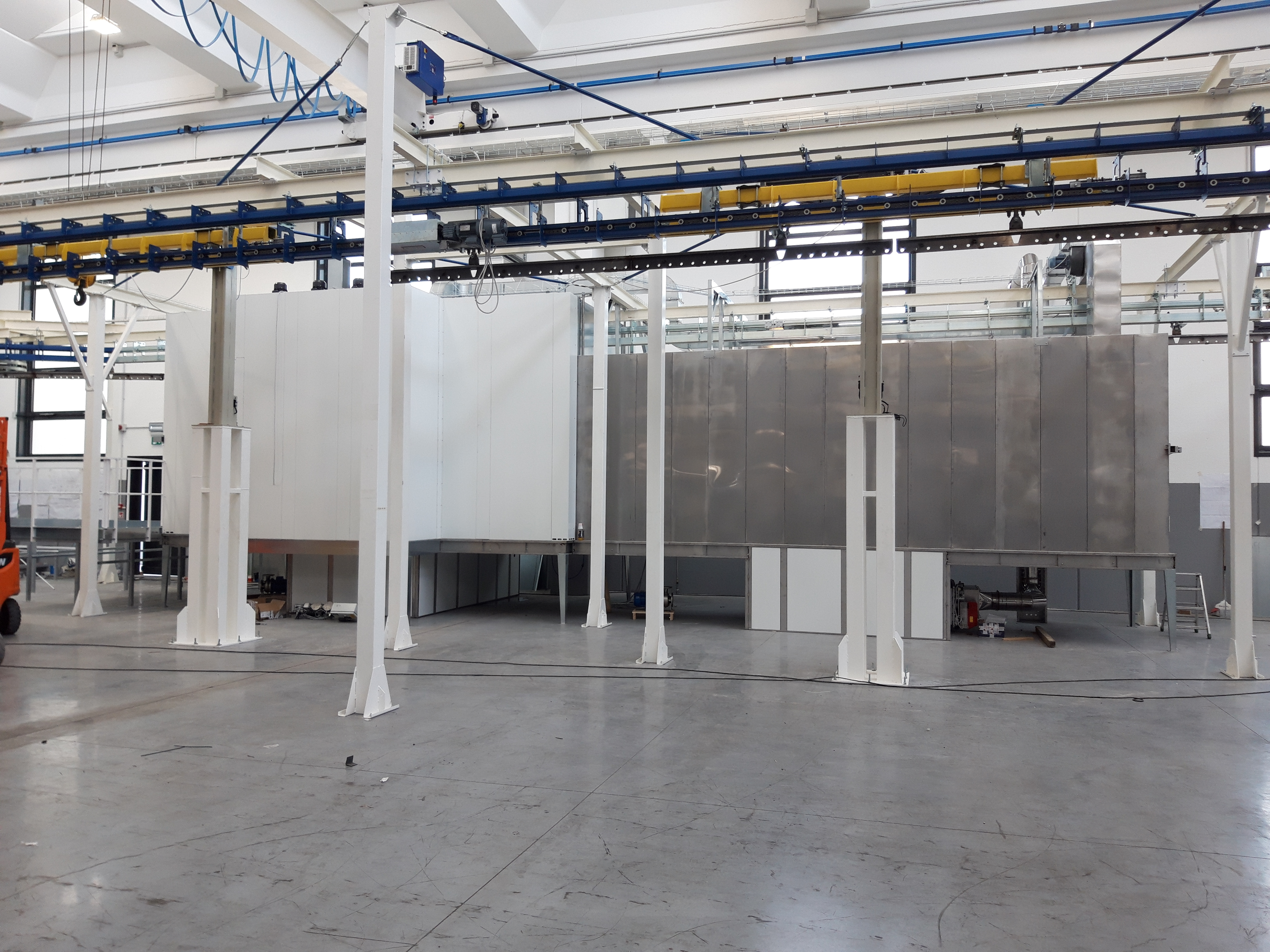
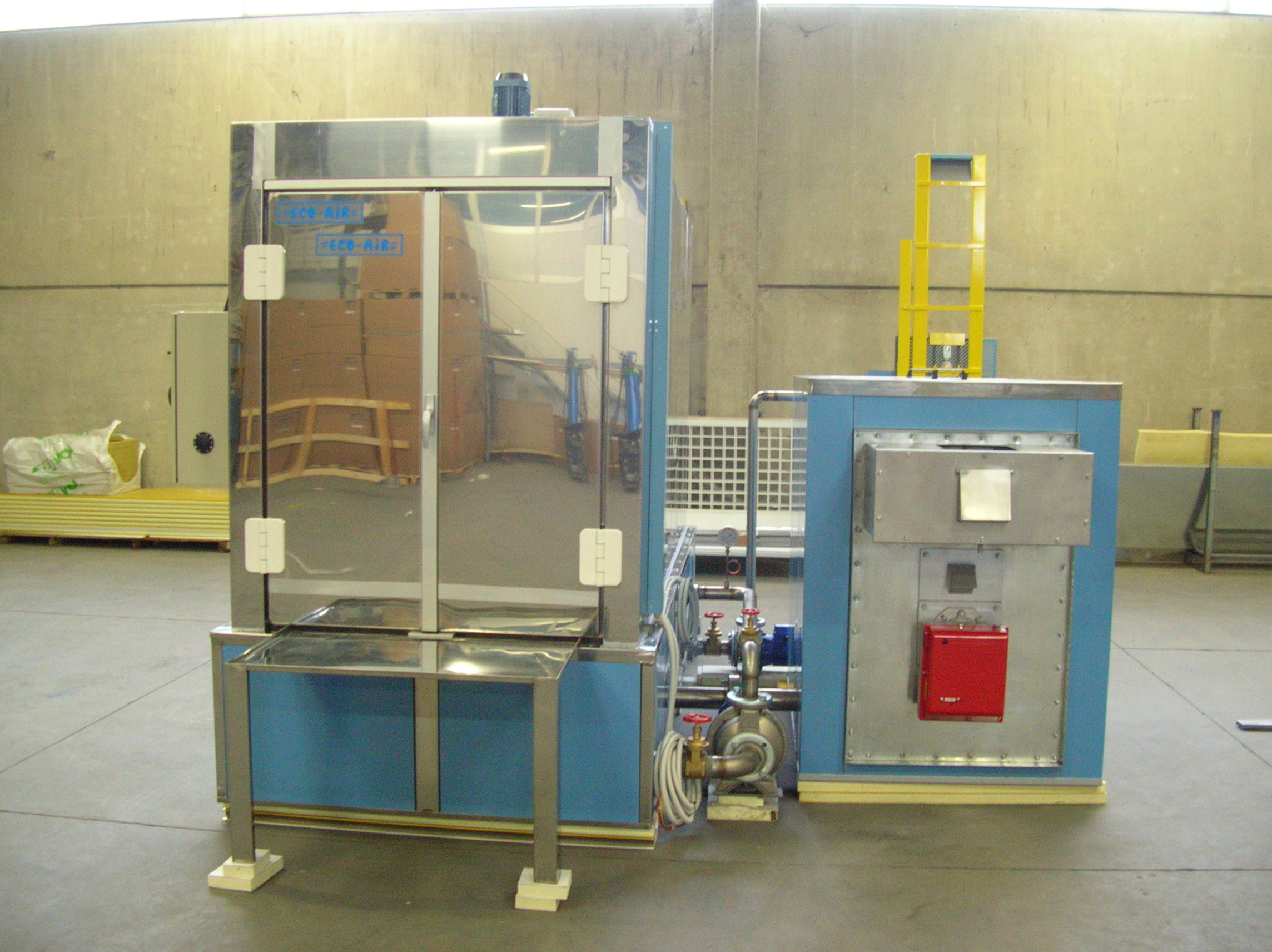
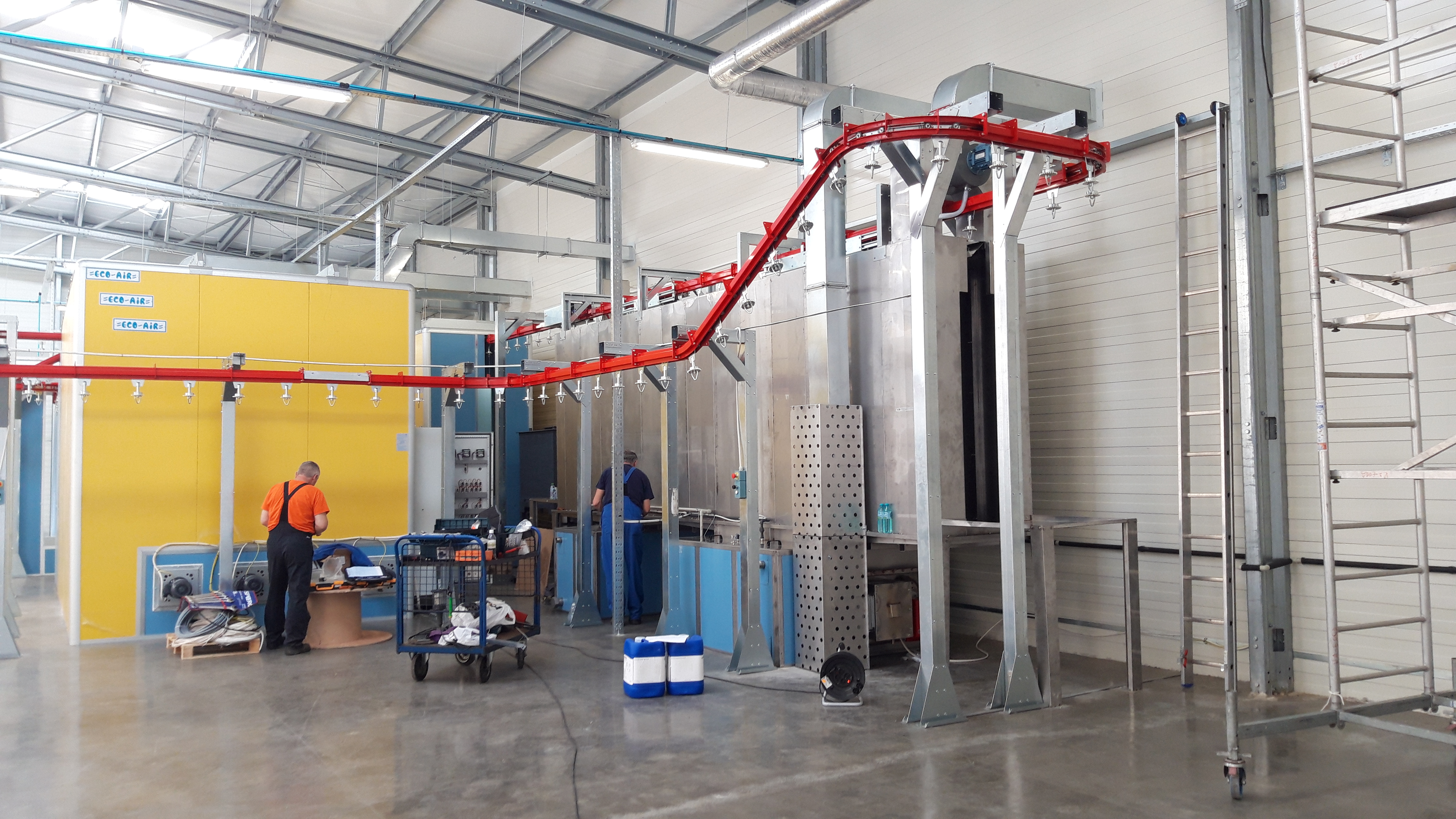
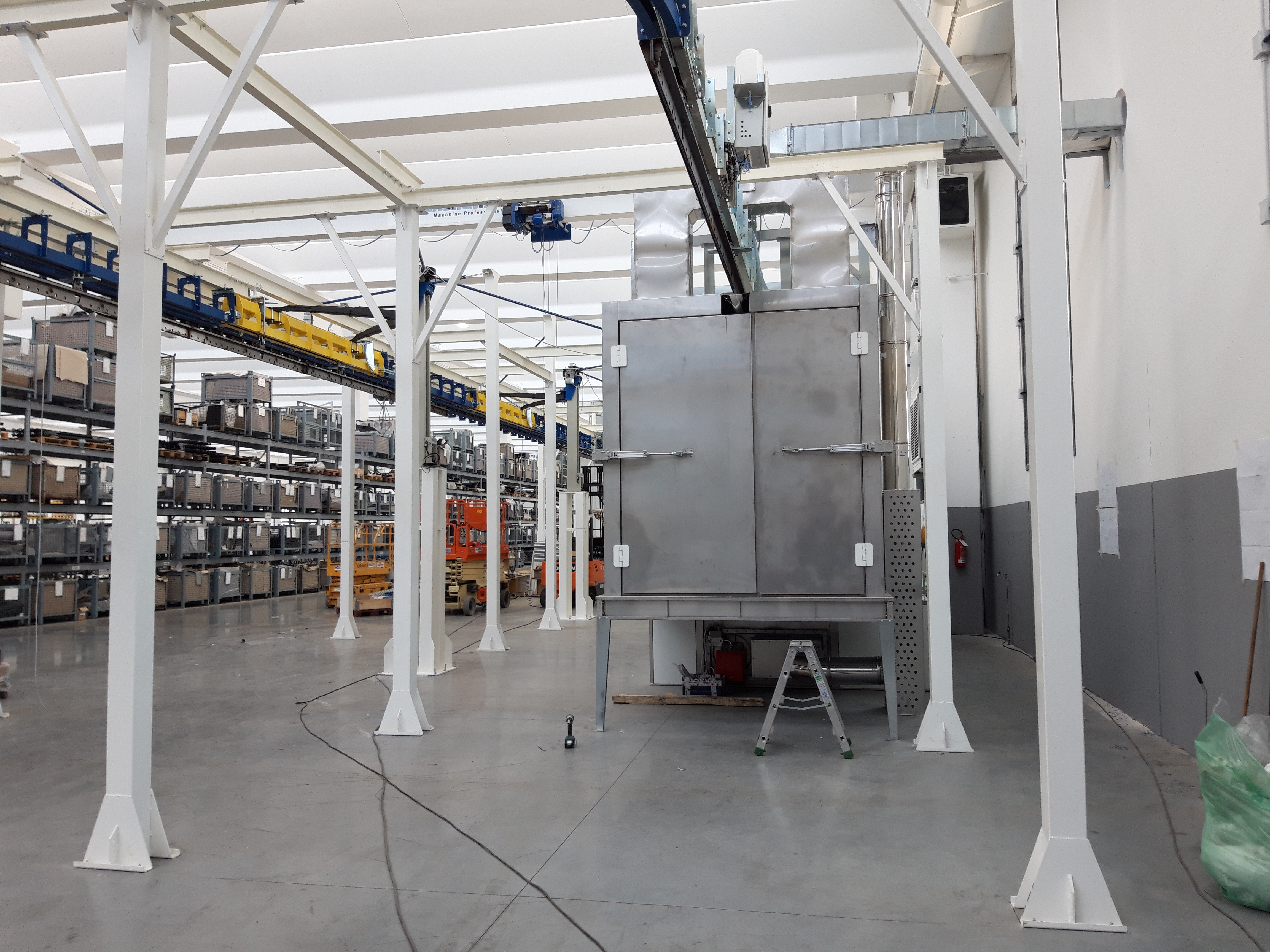
The pretreatment tunnel, also known as a degreasing or washing tunnel, is the ideal solution for preparing parts for the next stages of processing—especially painting.
A properly executed pretreatment process enhances paint adhesion, prevents damage to the components, and ensures that their aesthetic and functional qualities remain intact over time.
Parts are suspended vertically or horizontally—depending on their size—using hooks, racks, or transport trolleys.
They are tilted appropriately to prevent water from pooling or being dragged through the treatment line. Where necessary, holes are added to allow complete drainage of water.
Construction features
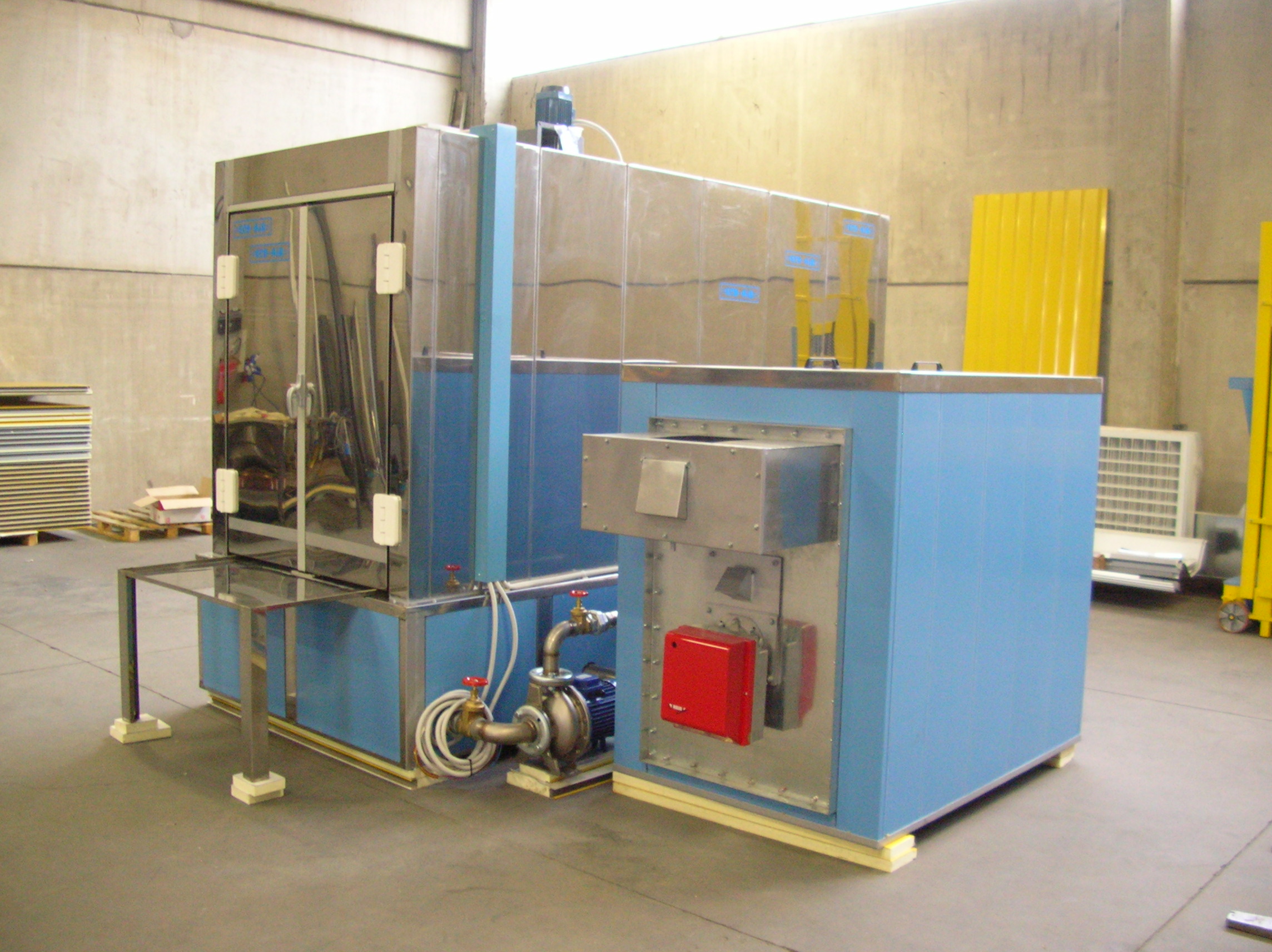
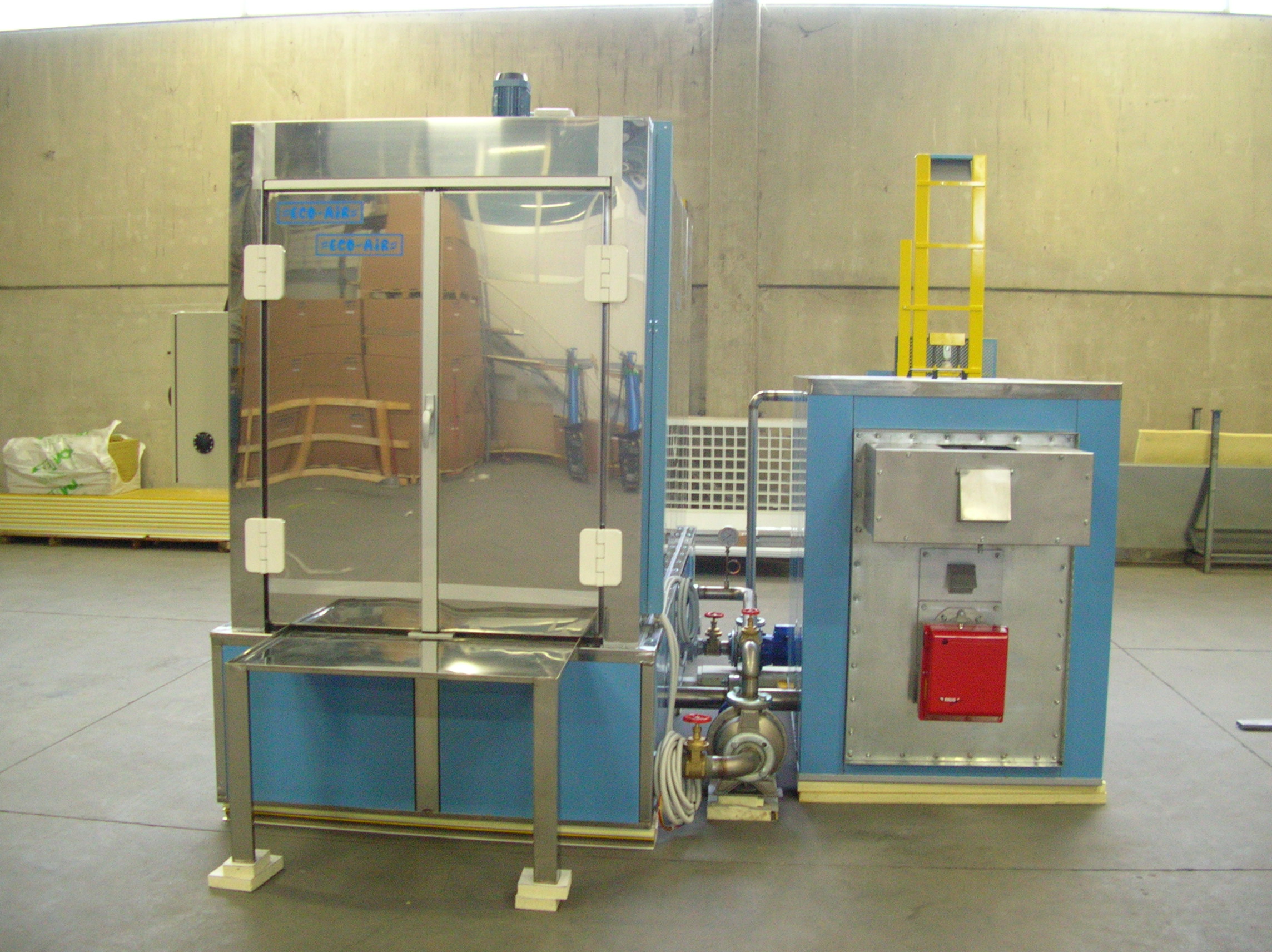
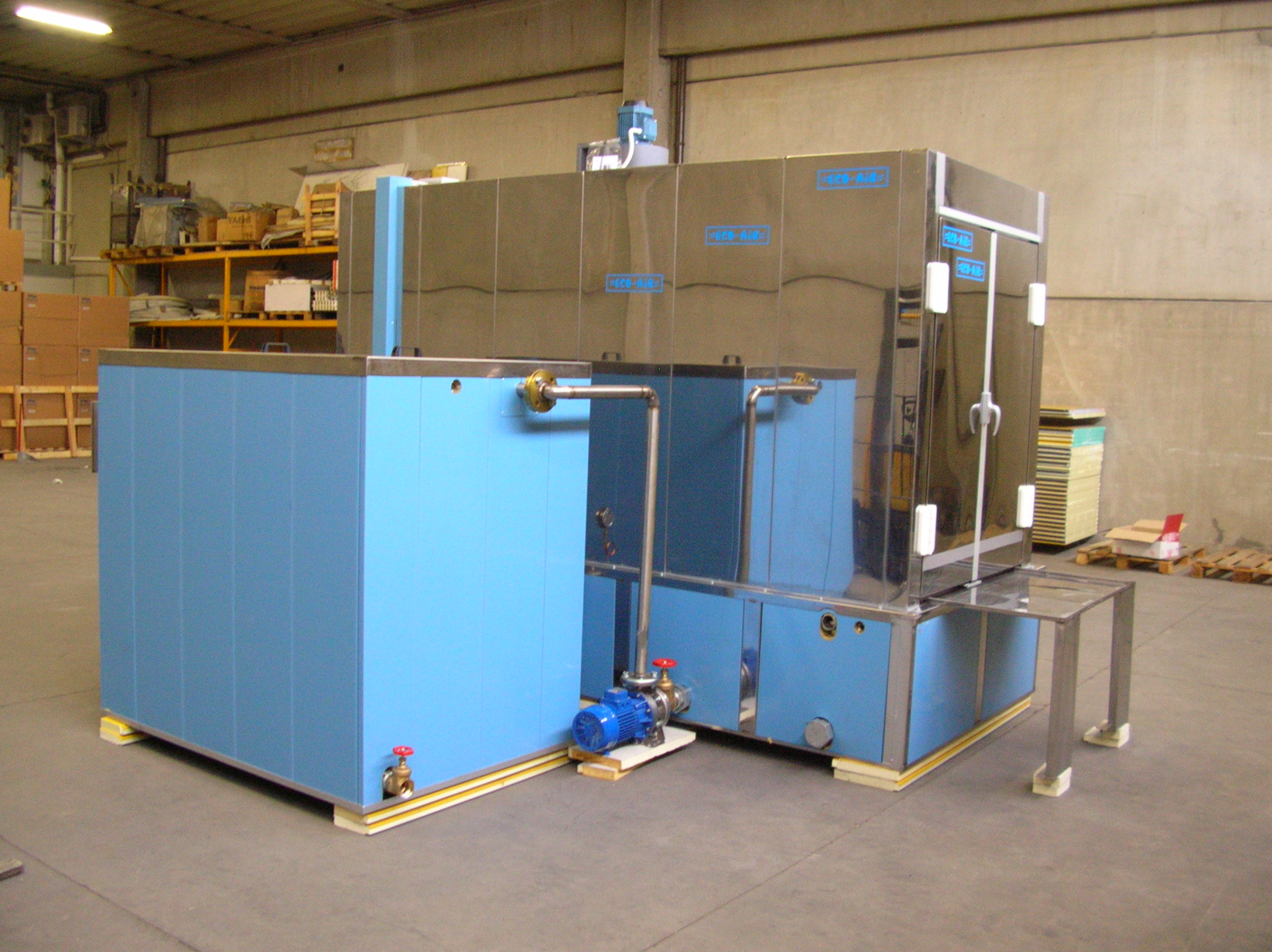
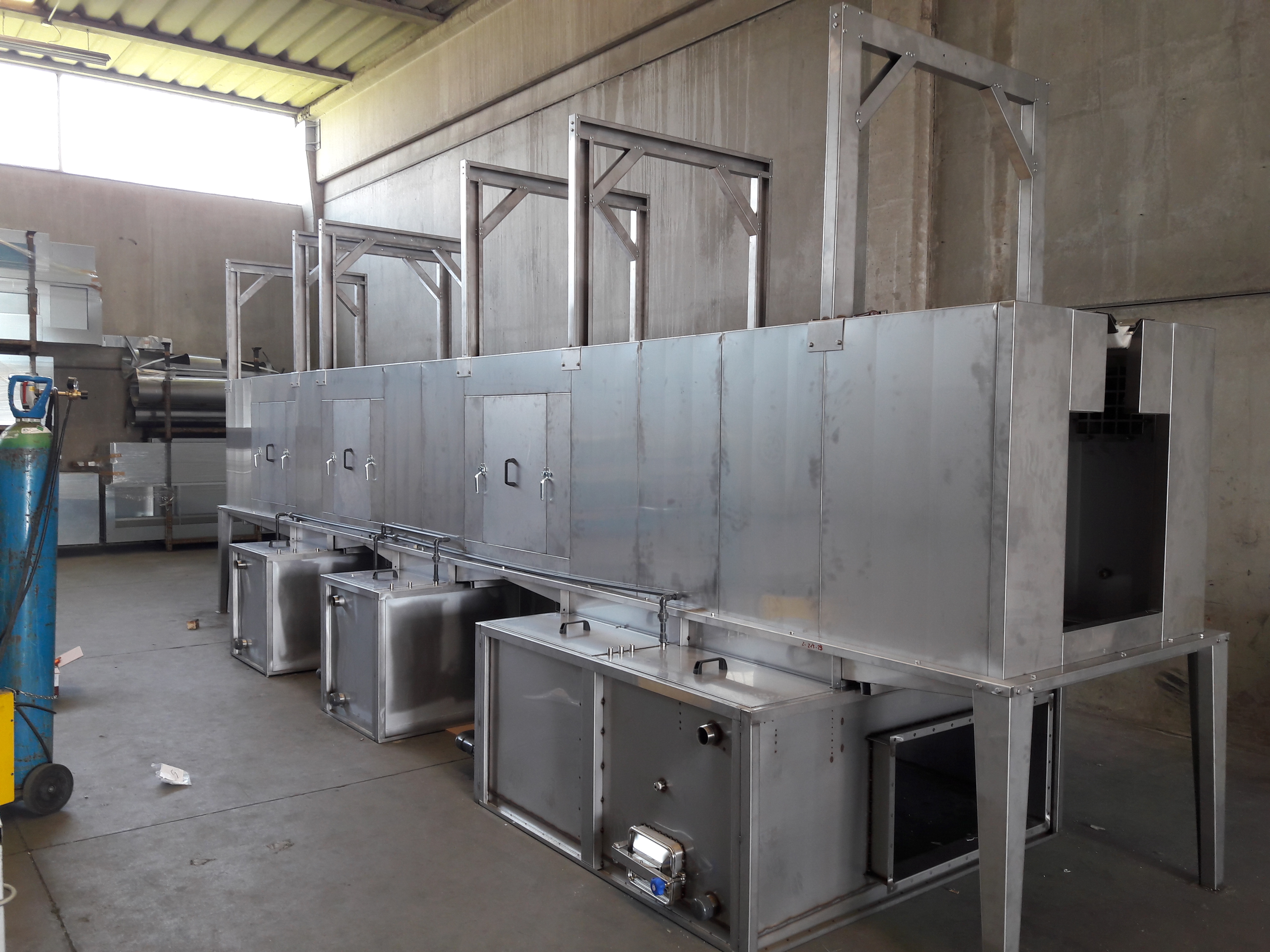
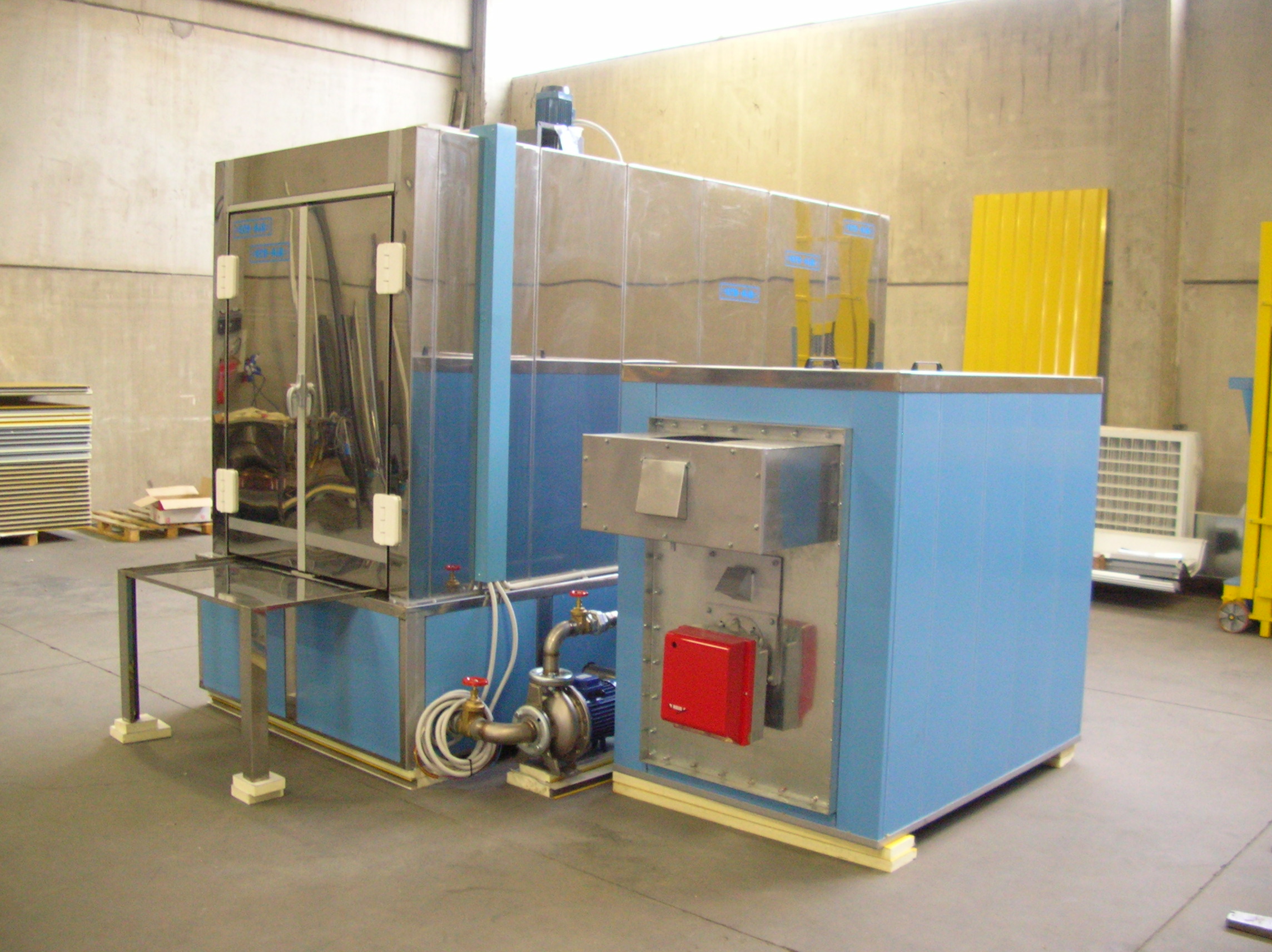
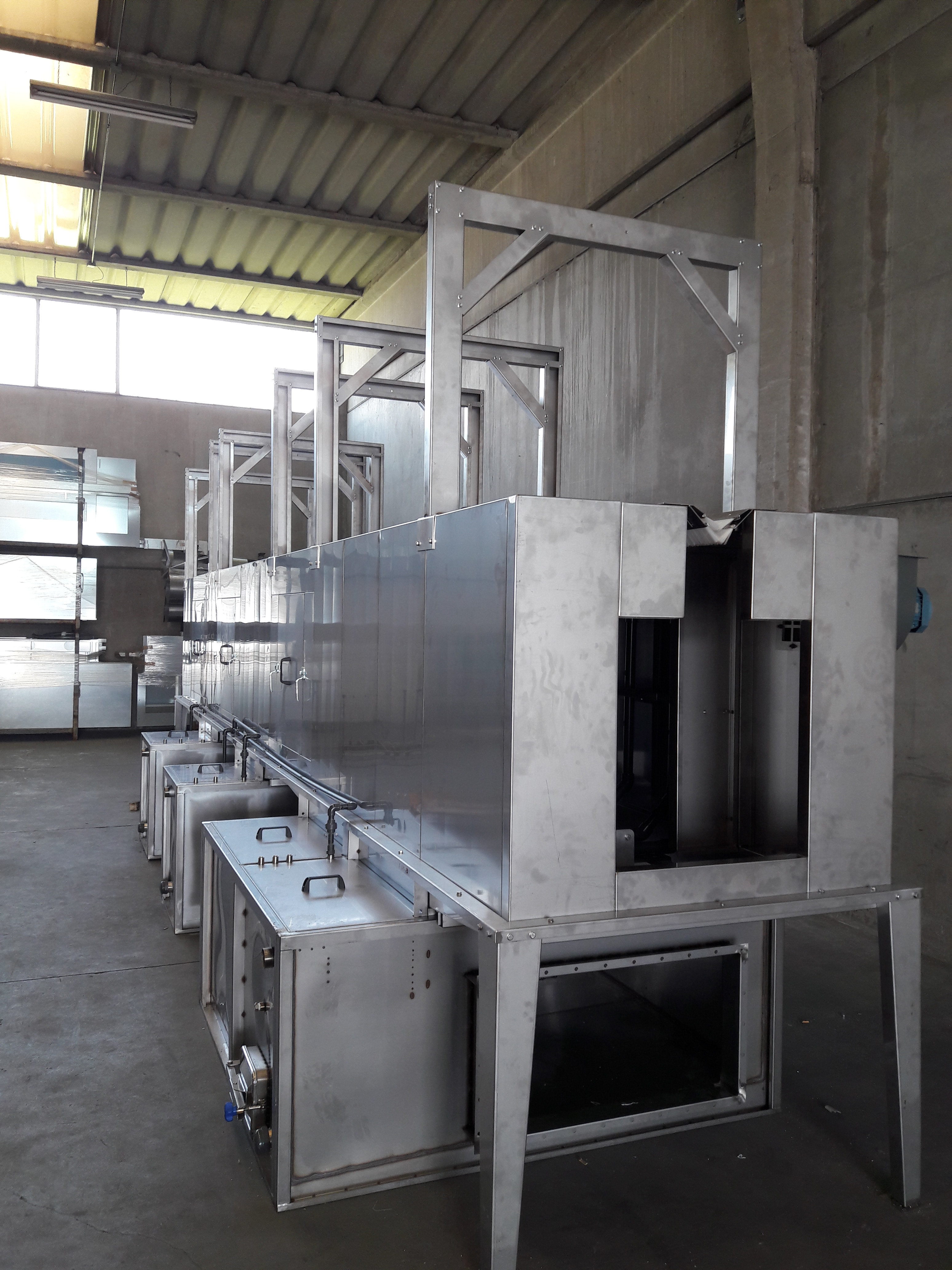
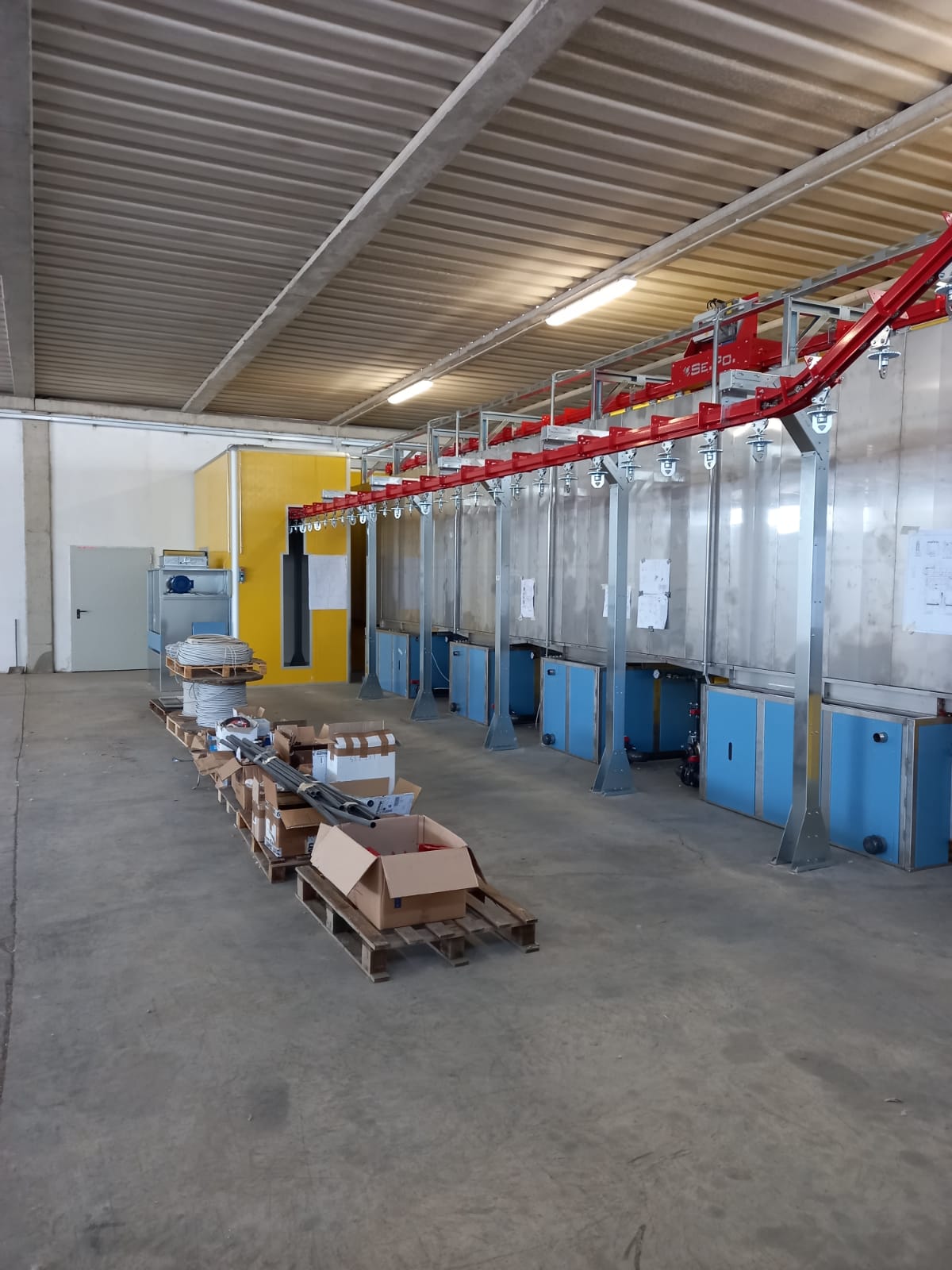
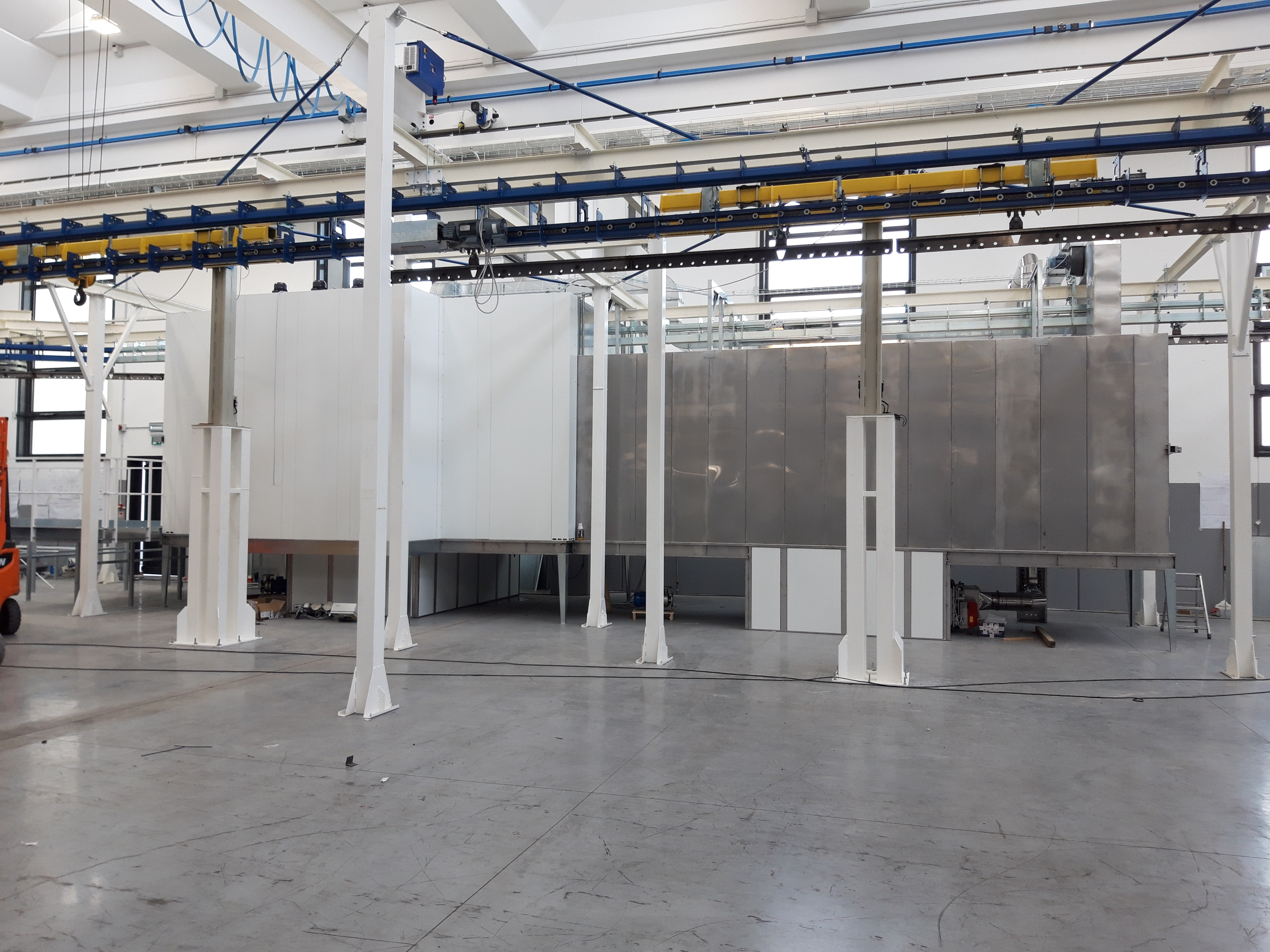
The containment tanks are typically made of AISI 304, 310, or 316L stainless steel sheet metal, reinforced on both the side walls and the floor to support the weight of the liquids.Phospho-degreasing and rinse tanks are insulated with rock wool, enclosed in dedicated panels securely attached to the tank sides using interlocking systems.
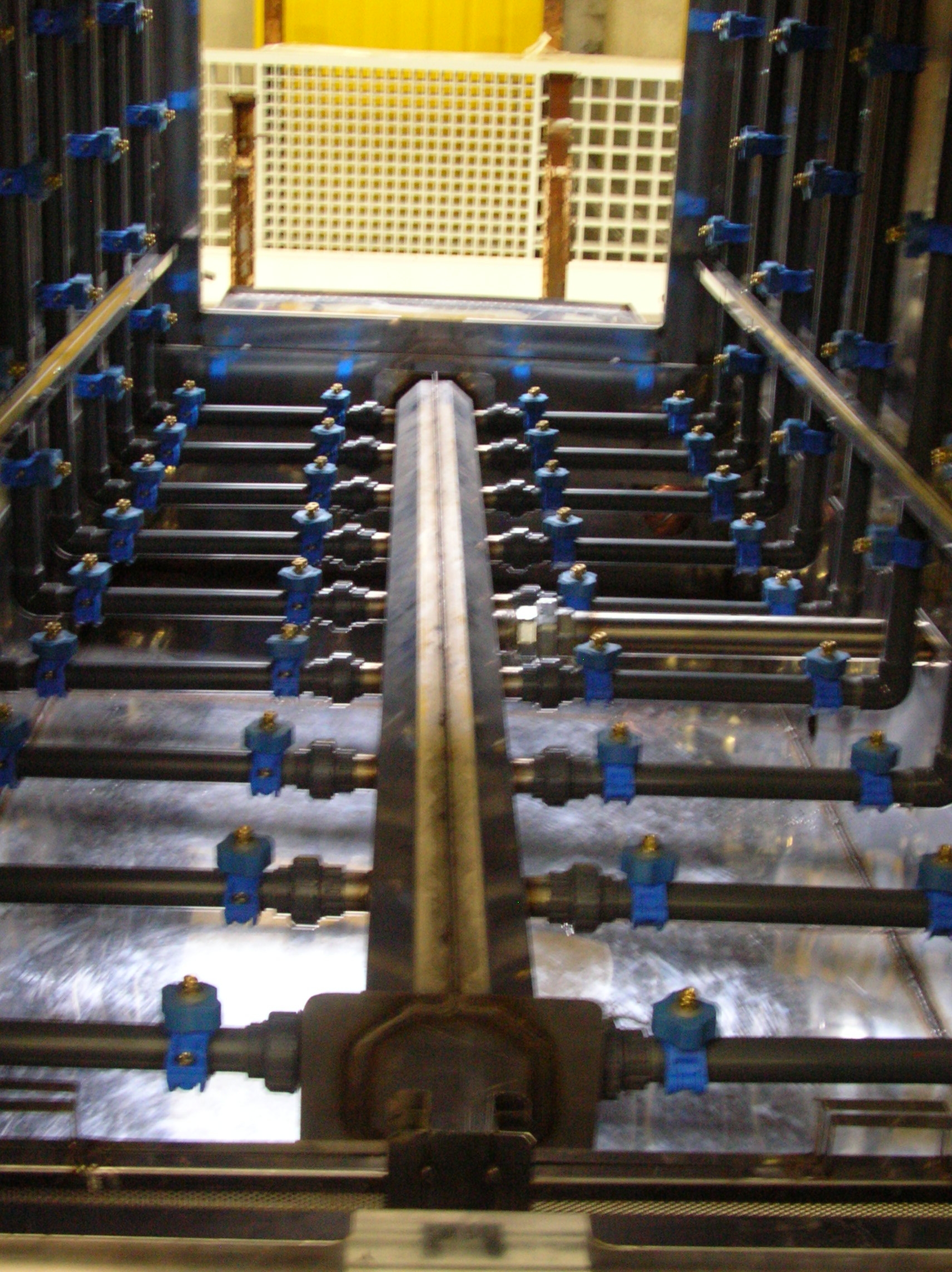
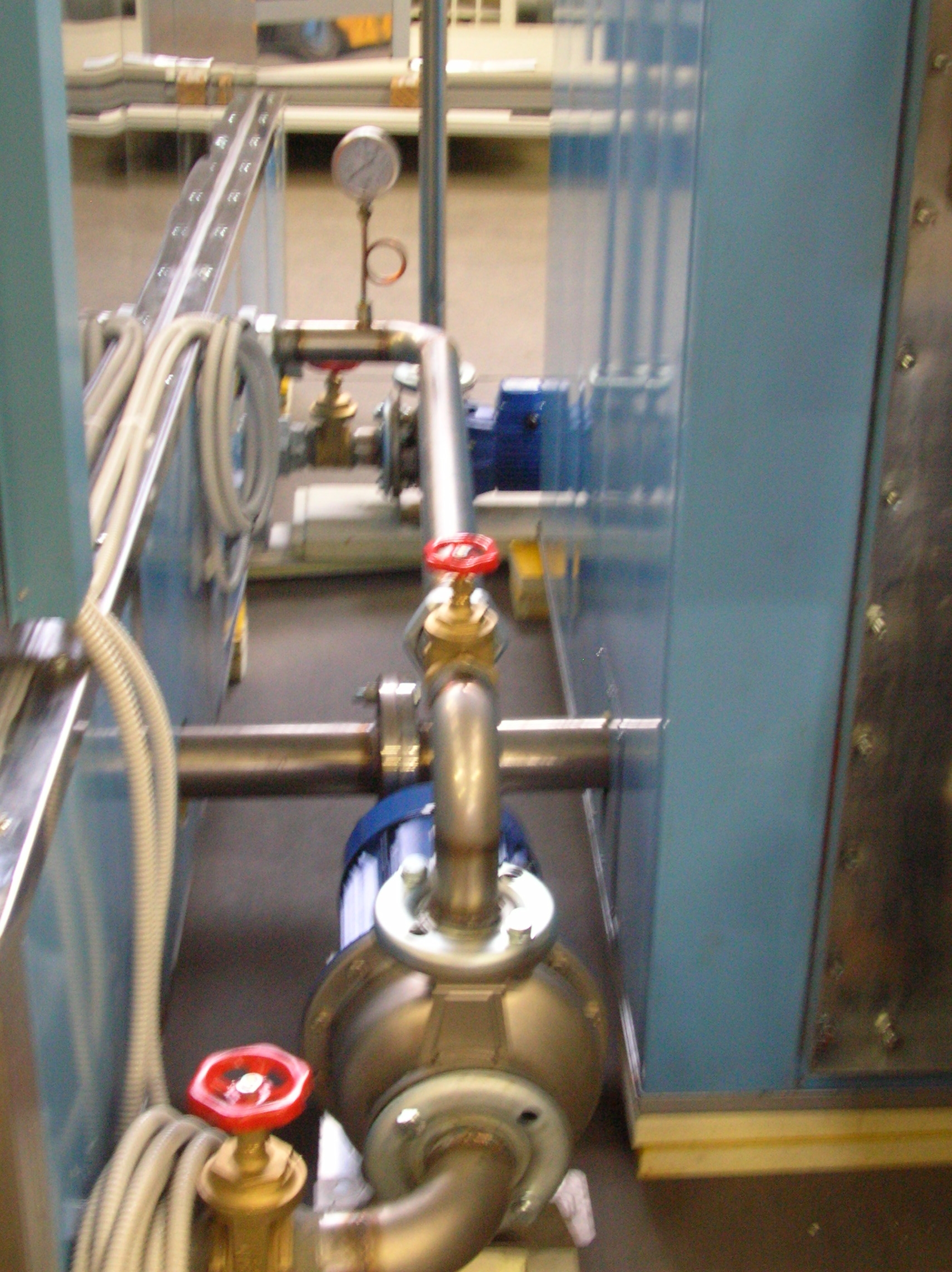
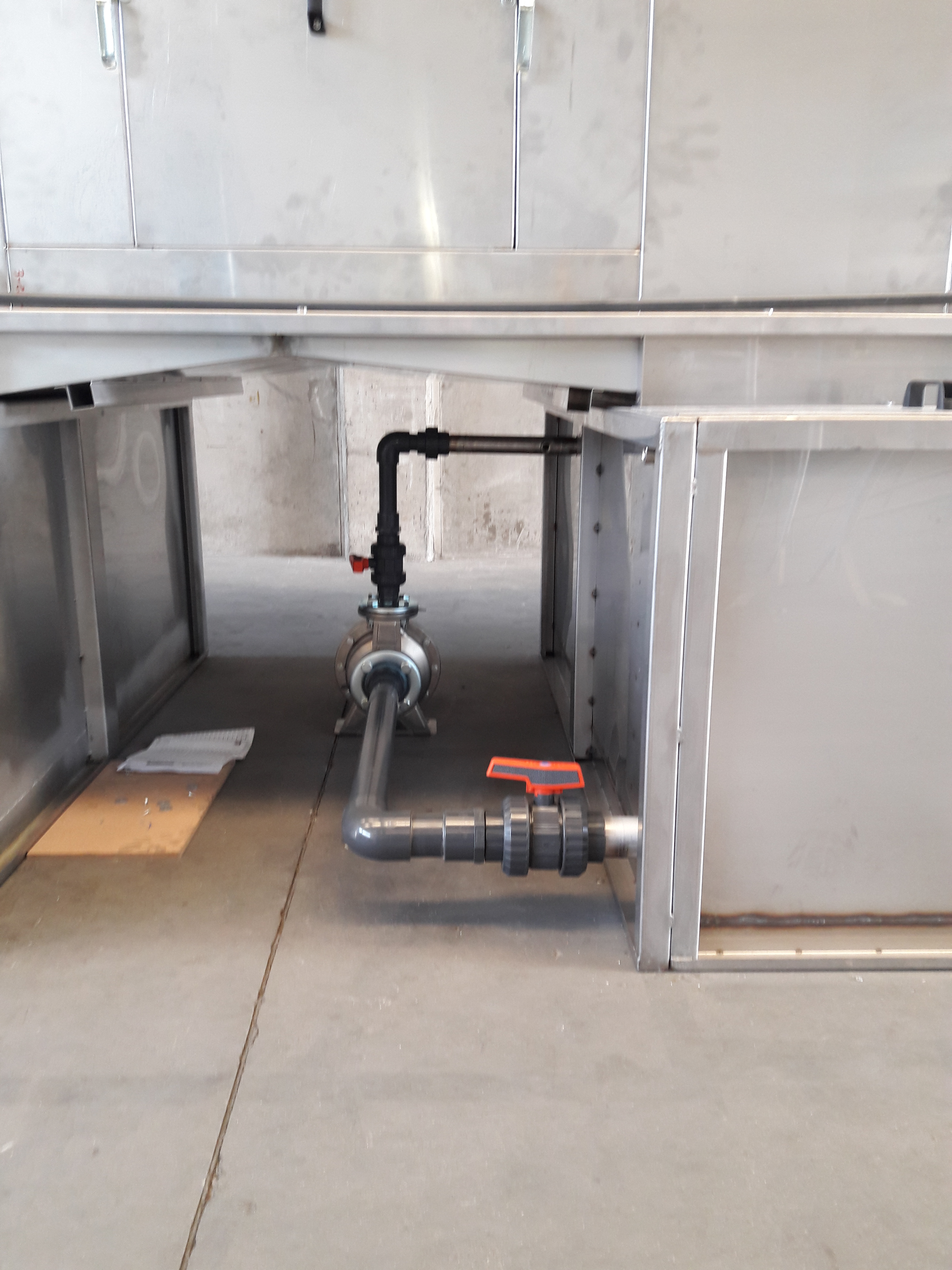
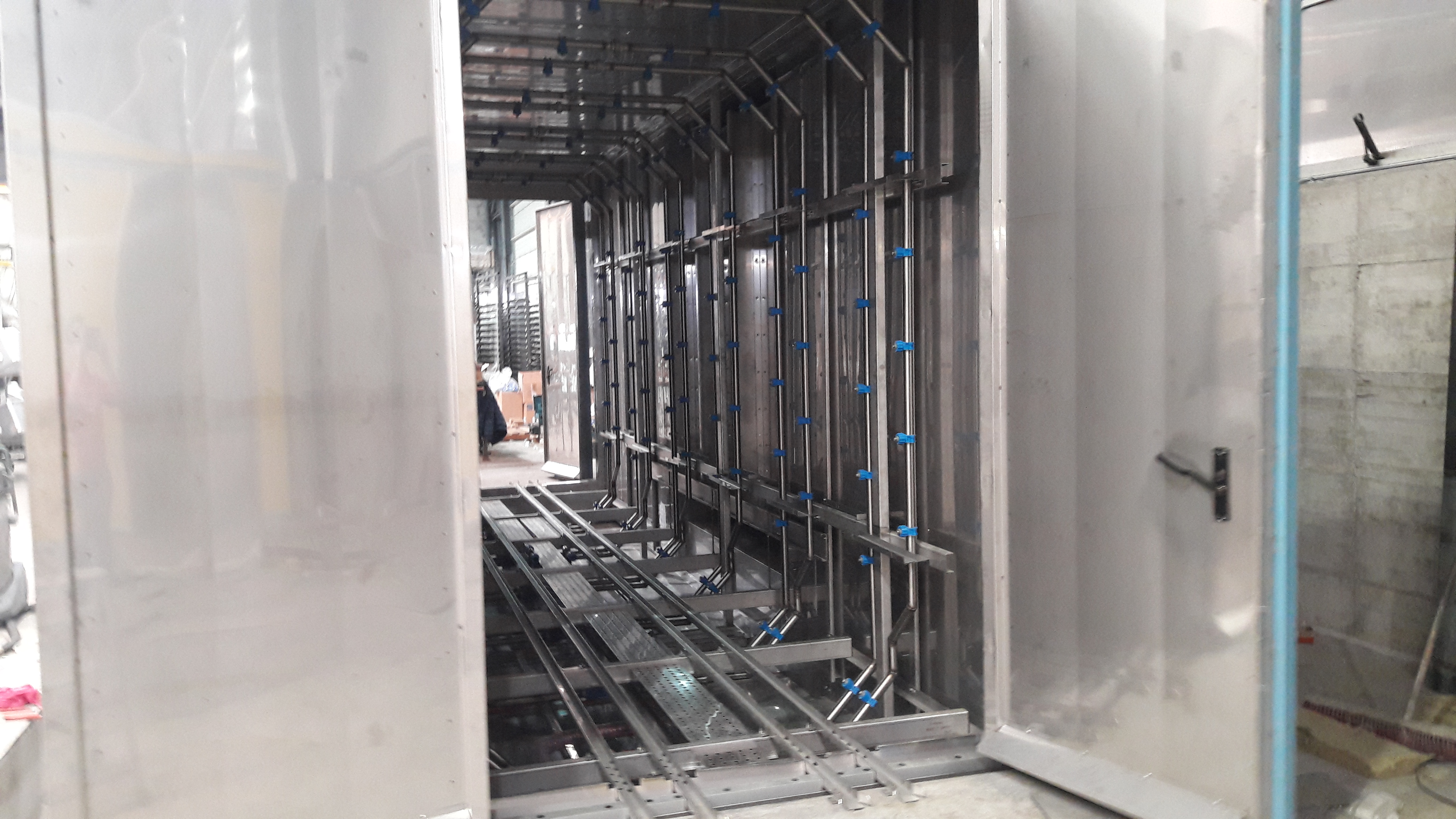
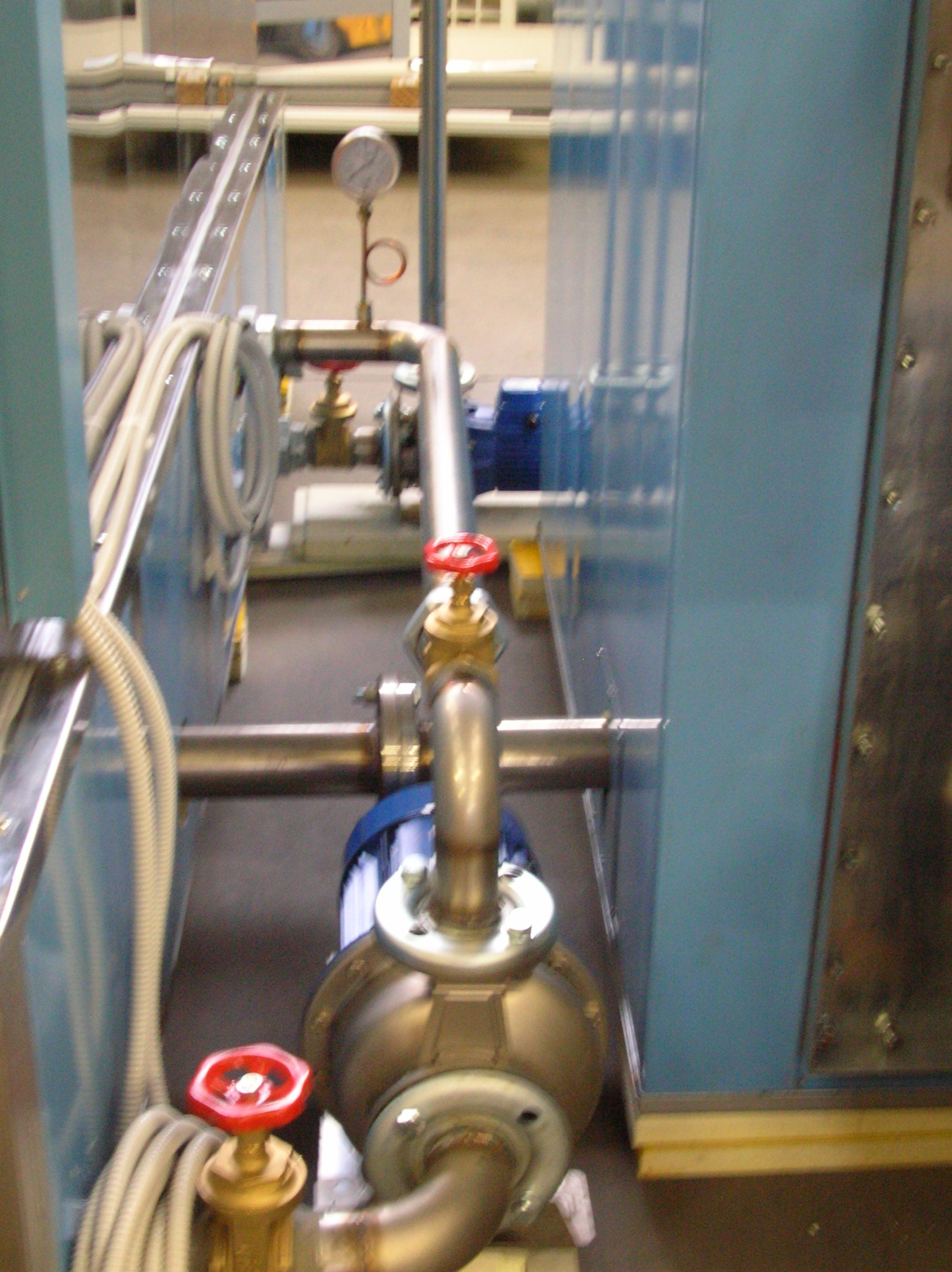
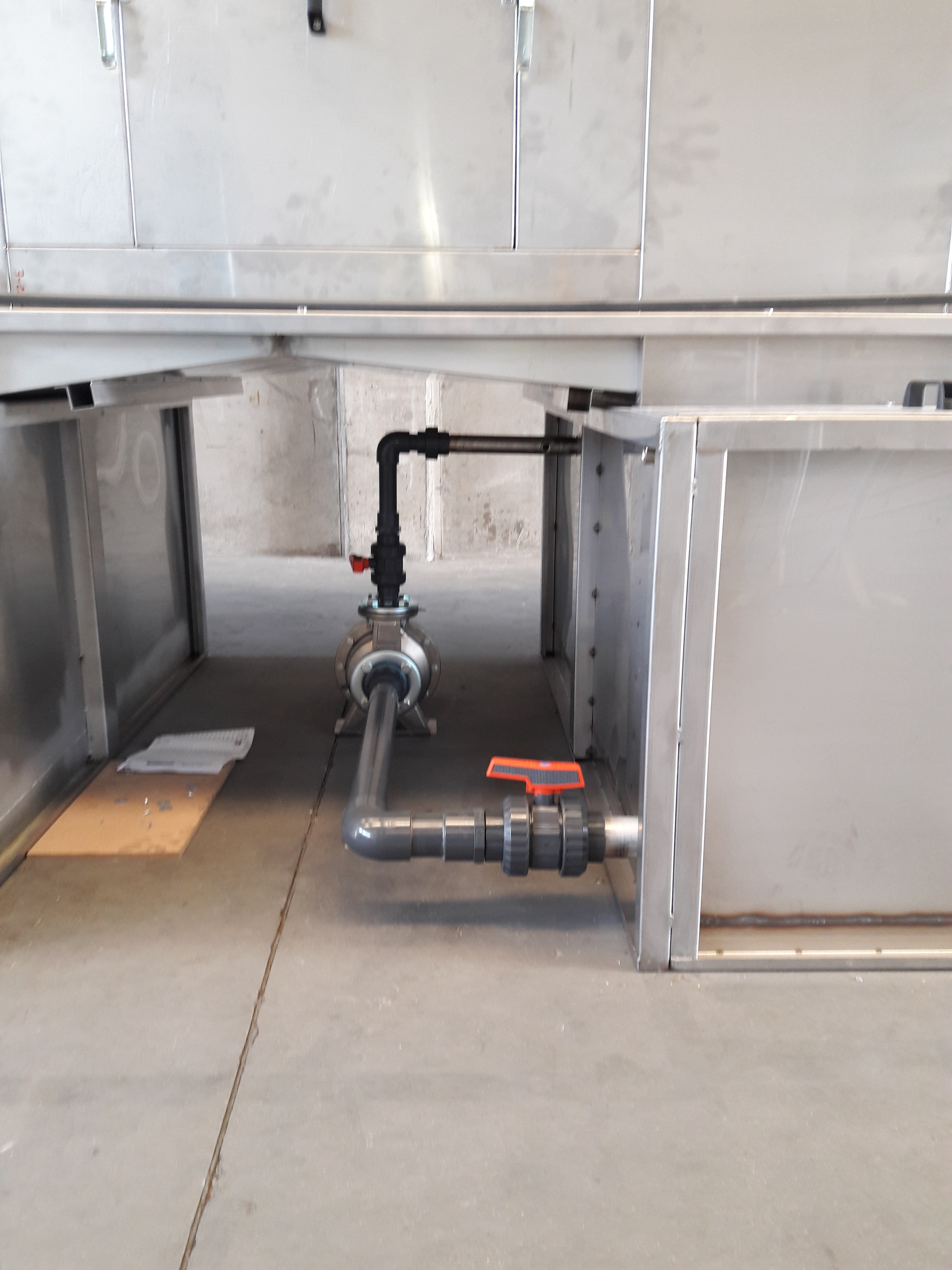
The tunnel’s hydraulic systems are made of PVC or stainless steel piping, complete with joints, shut-off valves, and pressure gauges for fluid monitoring. The spray nozzles are powered by horizontal-axis centrifugal pumps made of AISI 304 or 316L stainless steel.
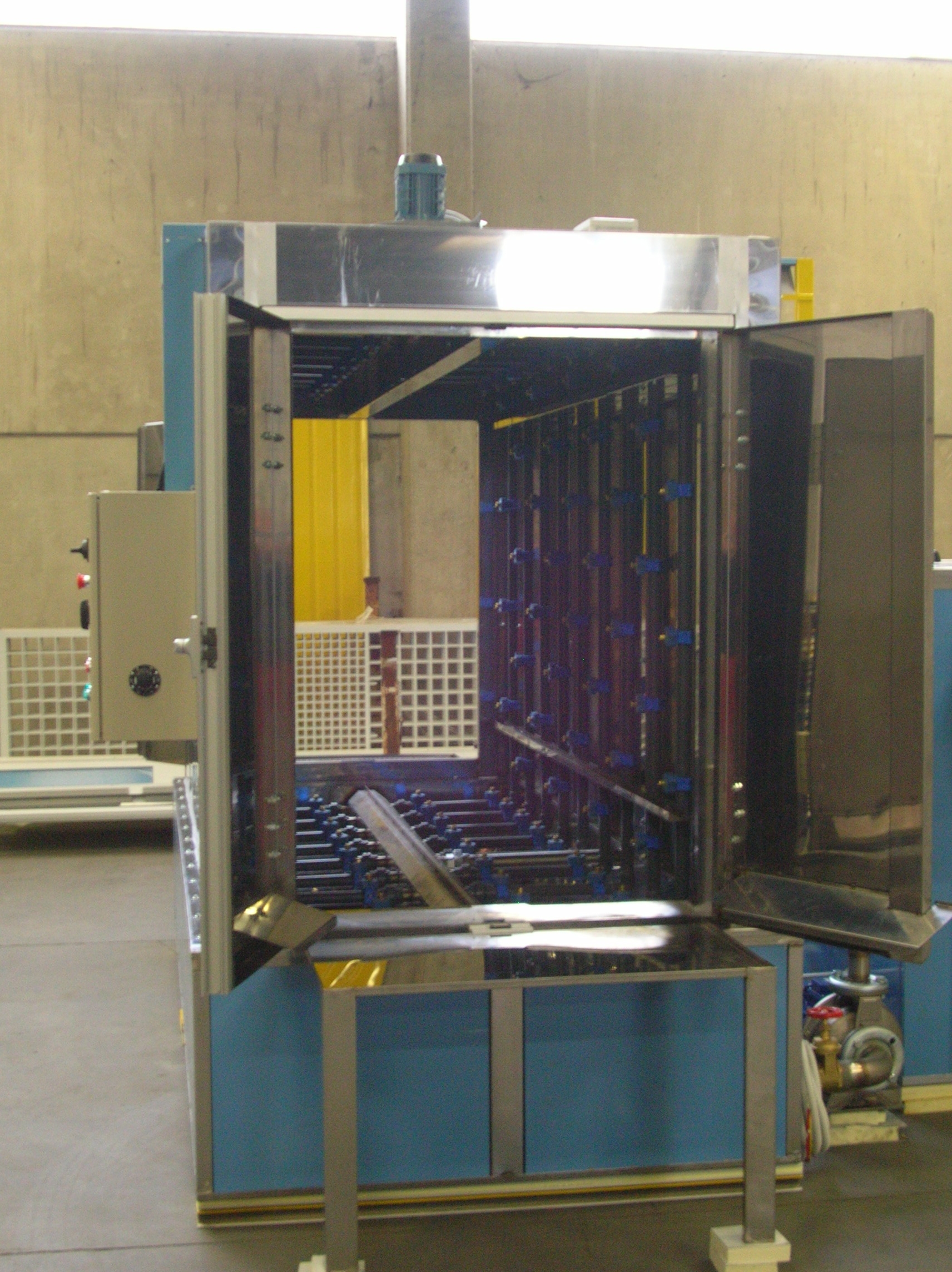
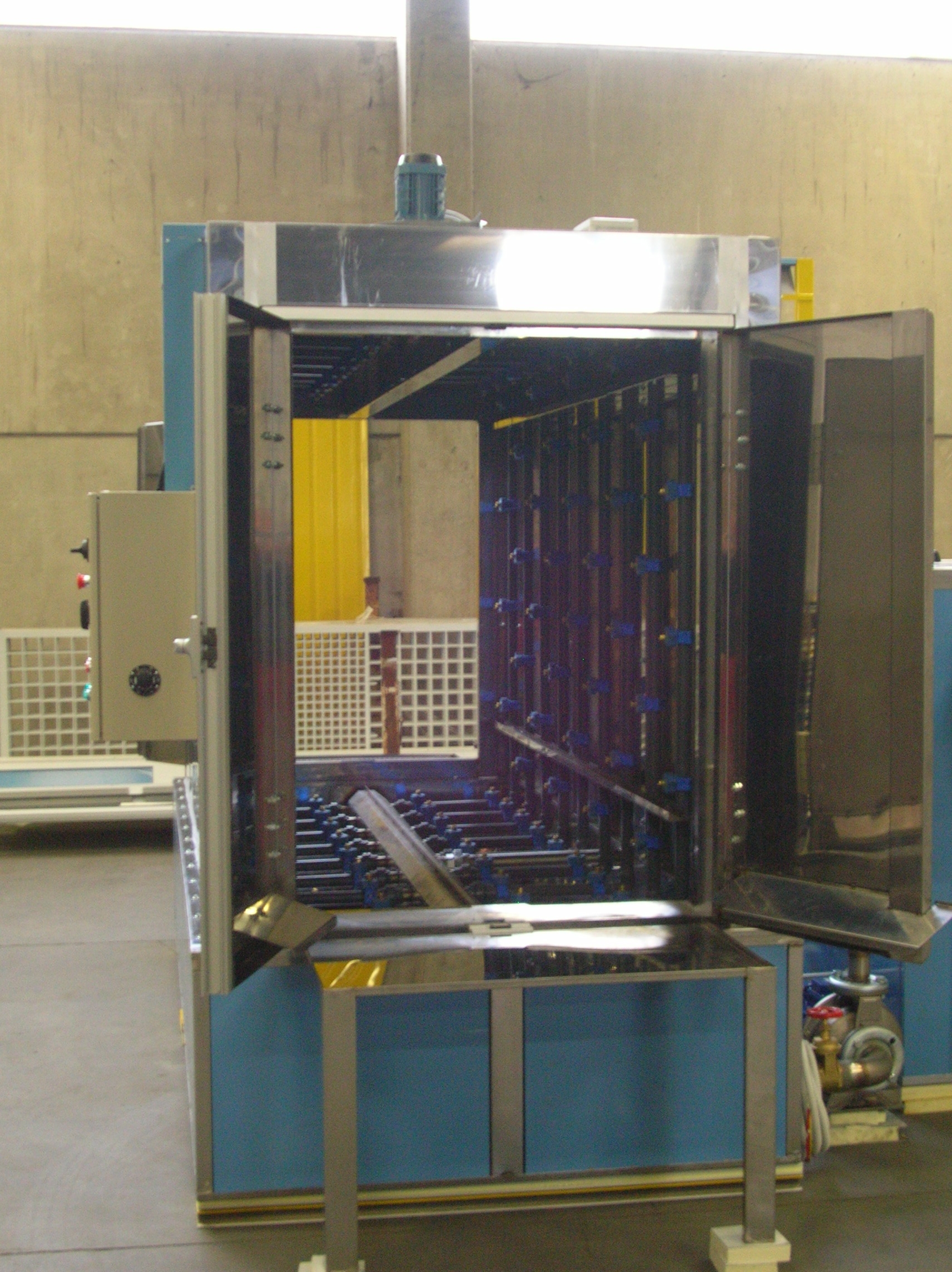
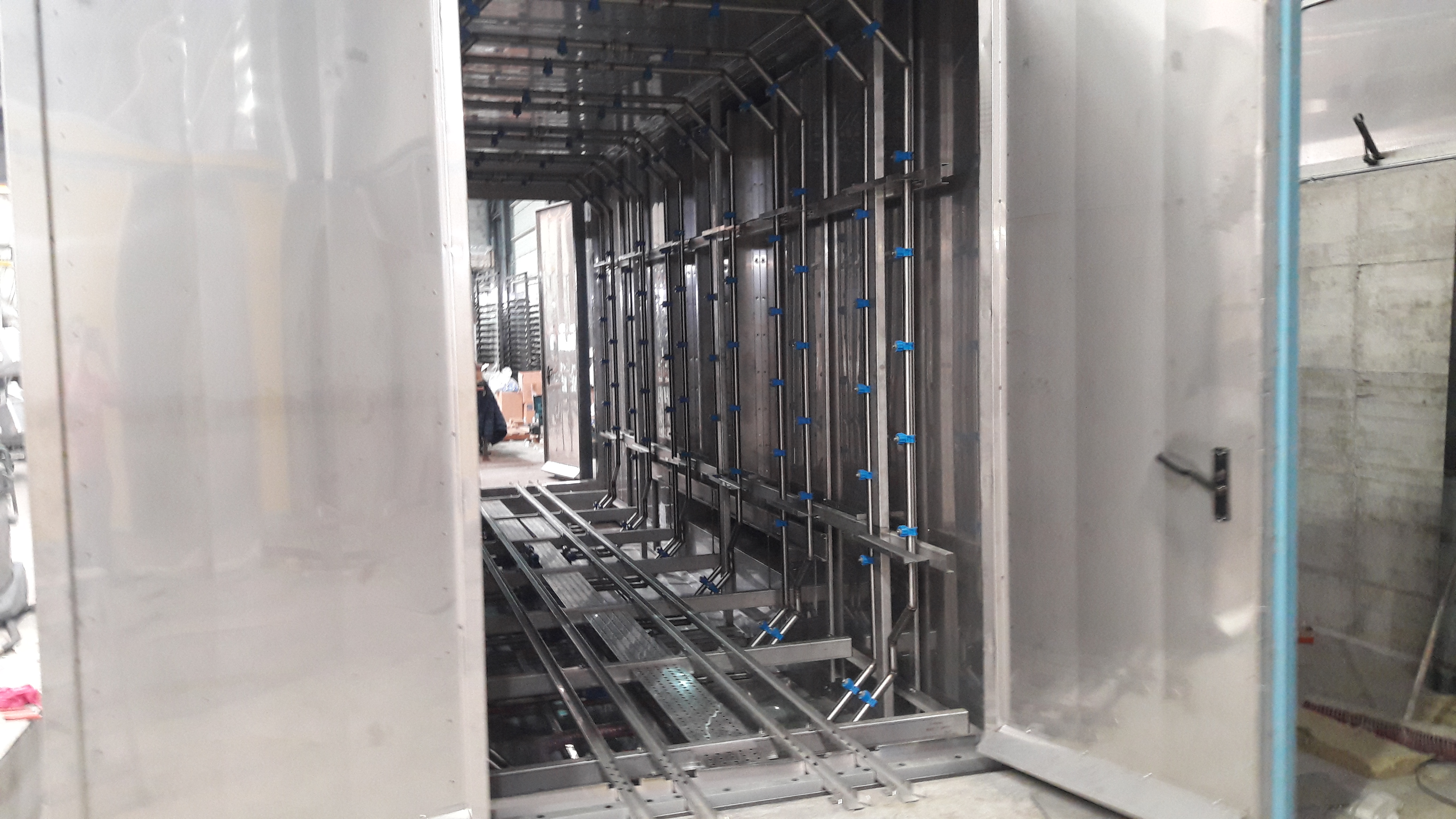
The upper tunnel body, located above the tanks, is made of stainless steel sheet metal, assembled from press-bent panels joined with screws. All joints are sealed with special cover profiles to prevent fluid leakage. The tunnel floor or collection tray is made of AISI stainless steel, mounted on a sturdy support frame.
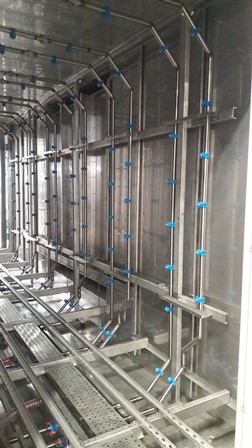
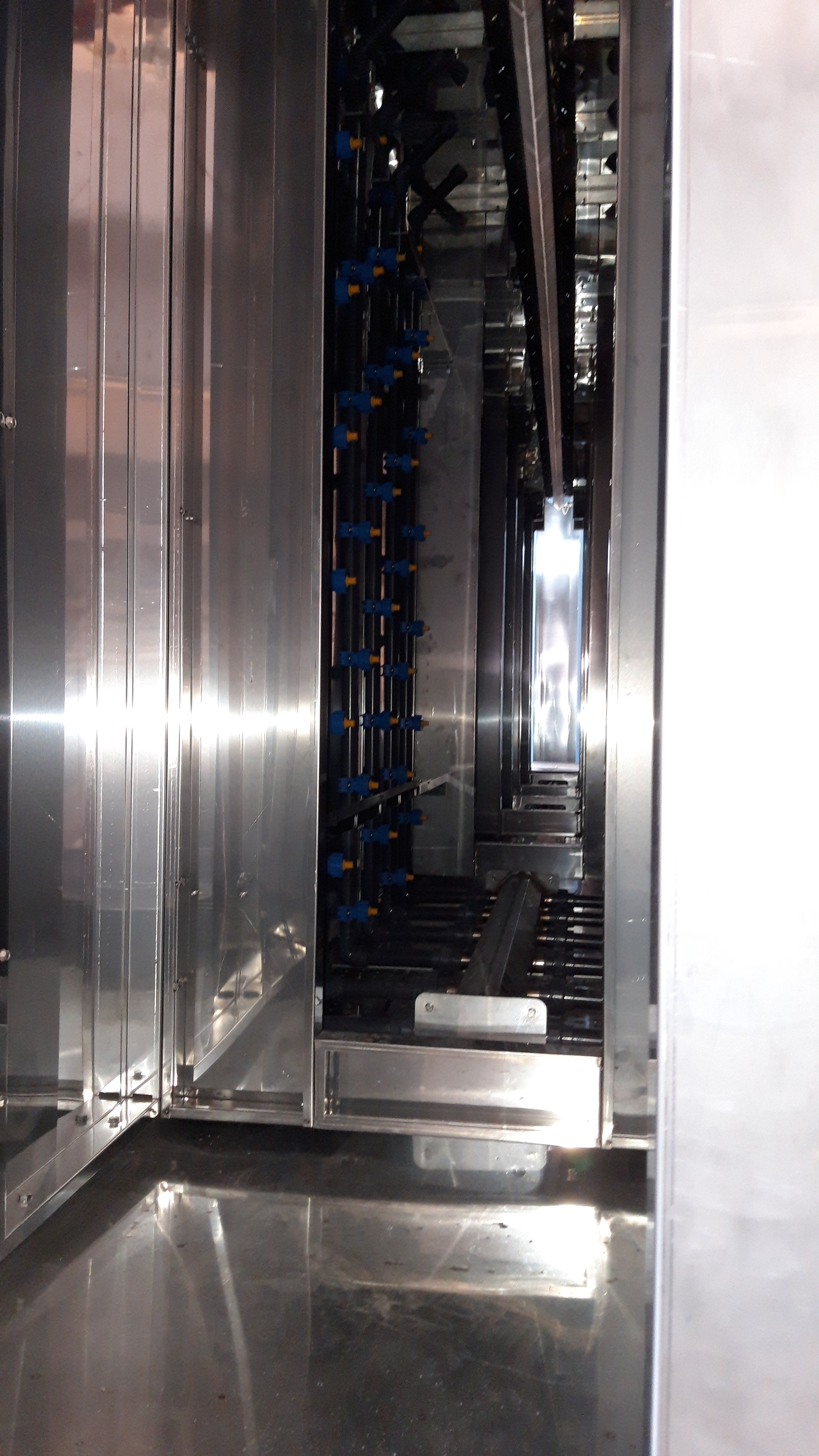
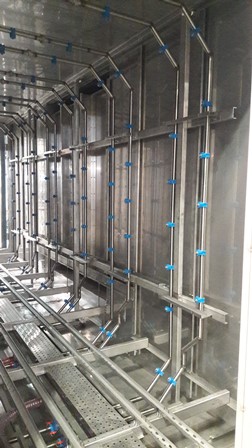
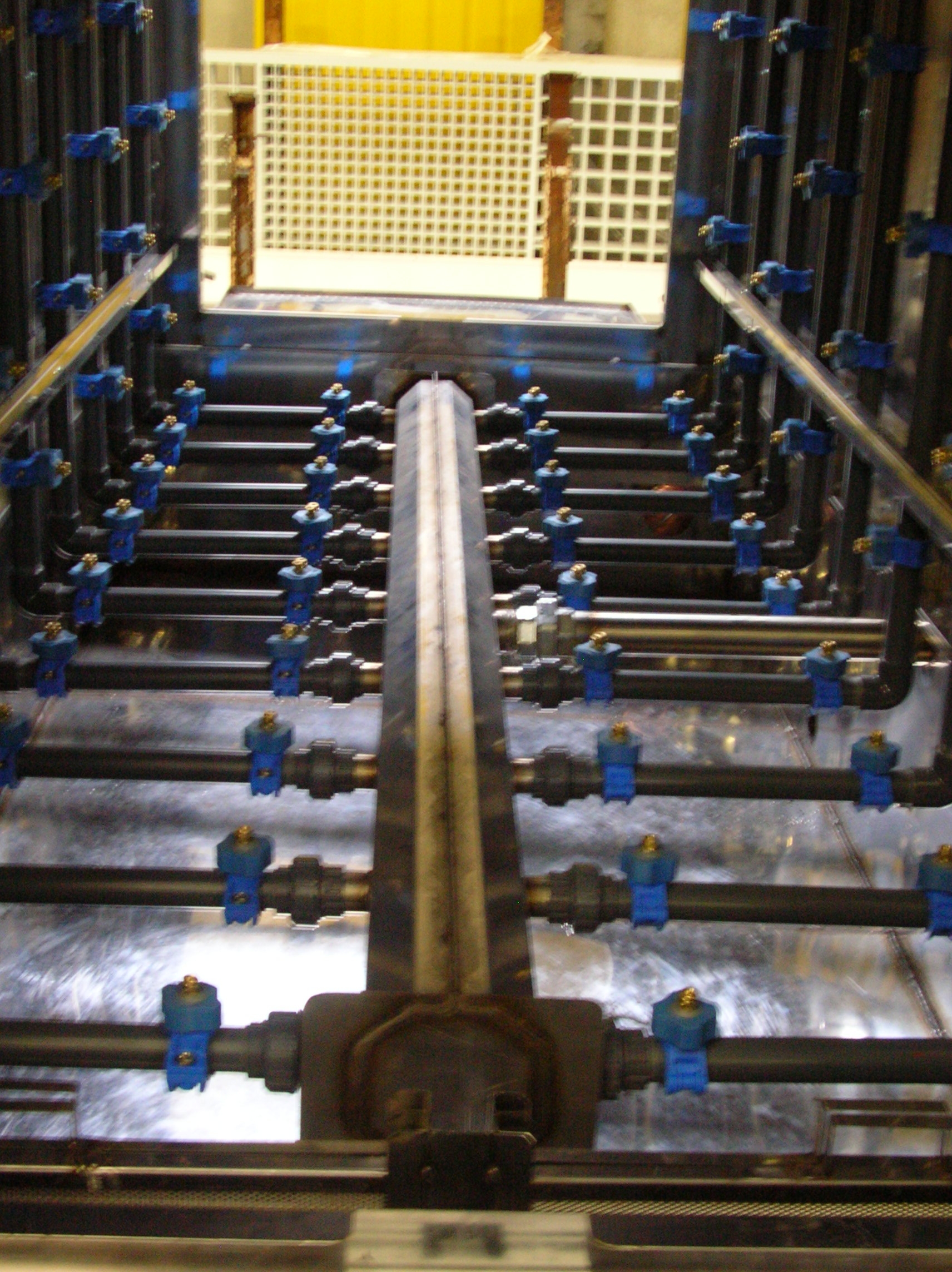
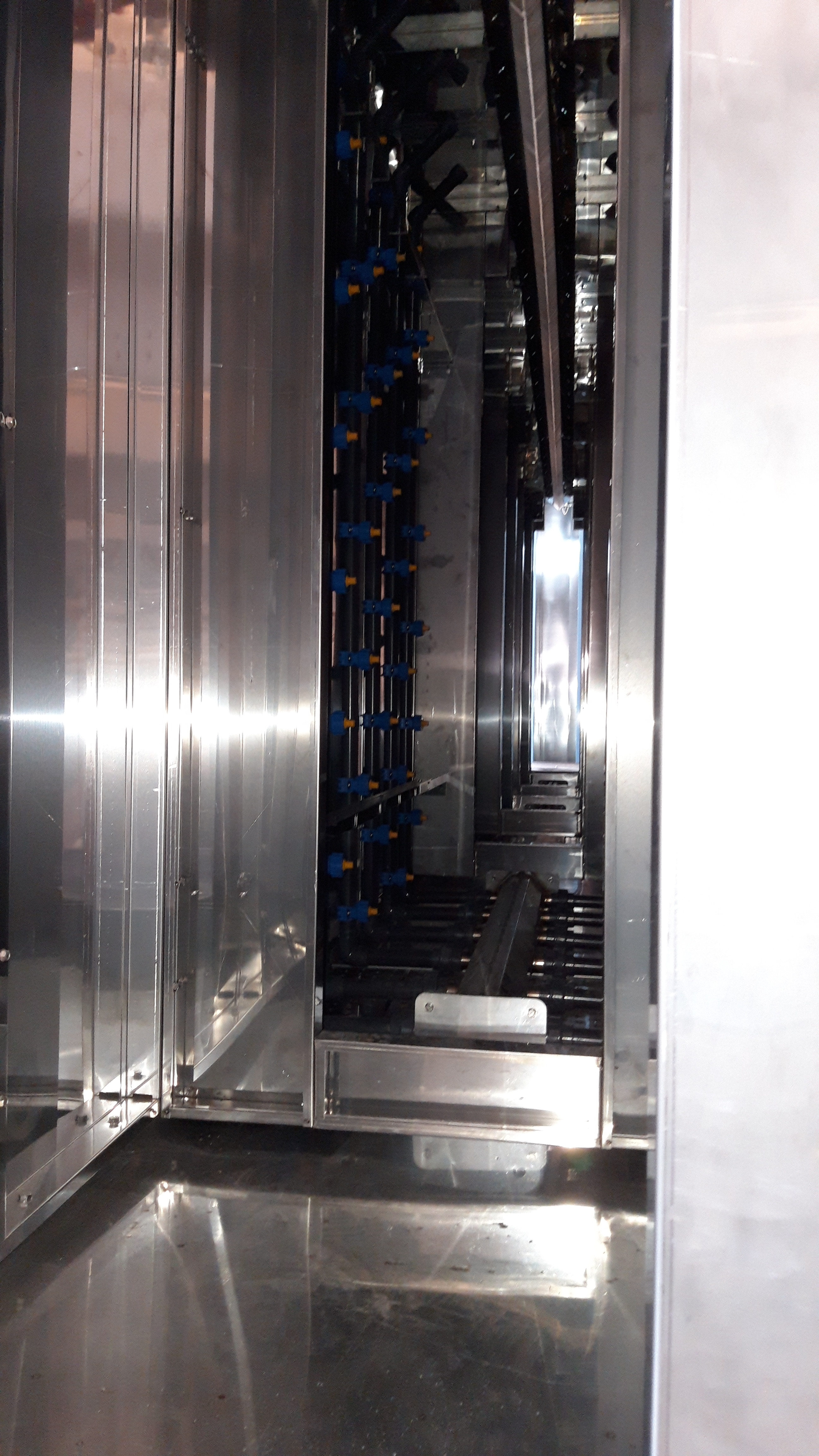
Spray ramps, made of either PVC or stainless steel, are installed along the tunnel sides to ensure optimal cleaning coverage. Polypropylene spray nozzles are attached using clamps or snap-fit systems and are carefully angled for efficient and uniform spraying on the components.
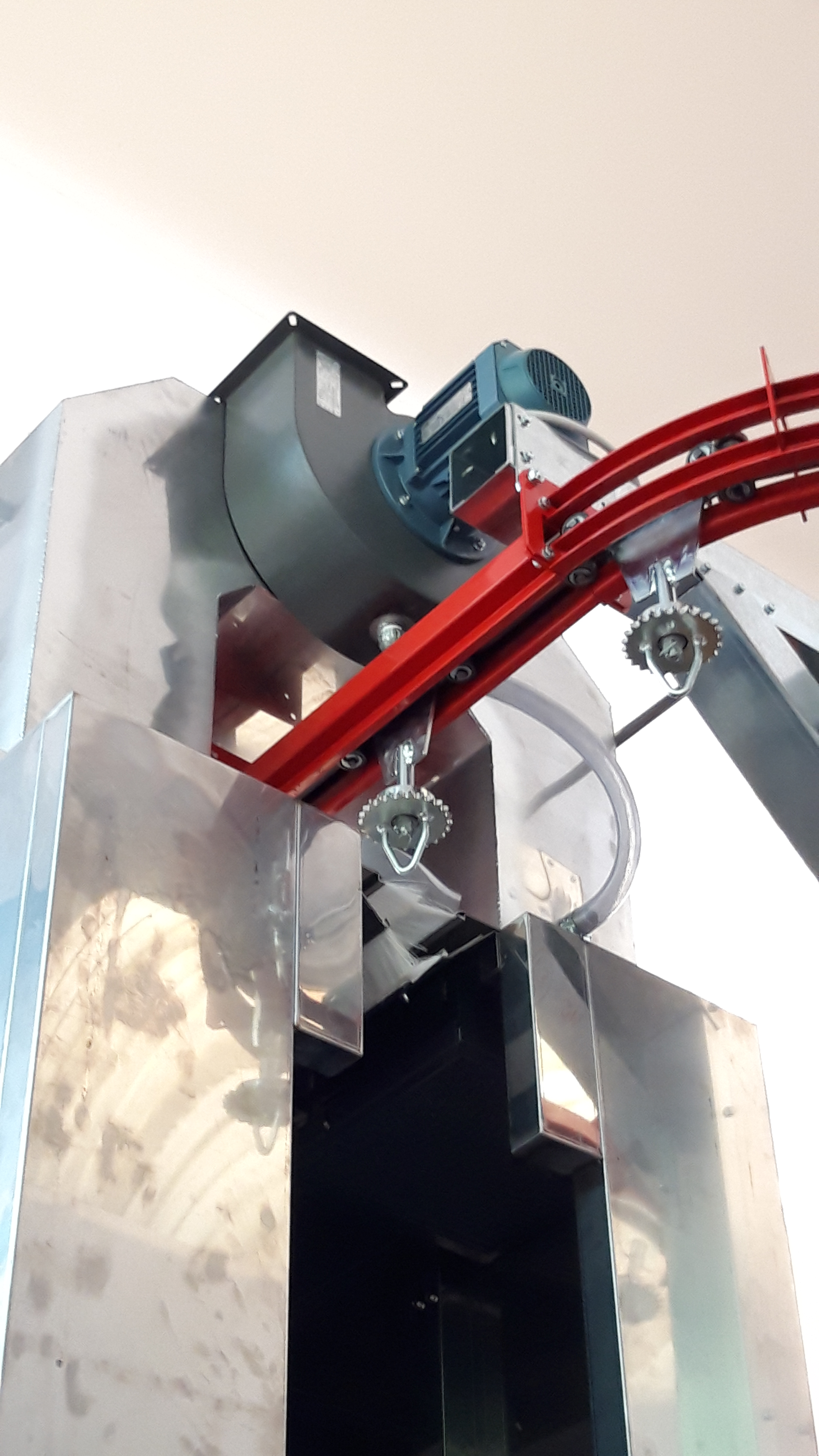
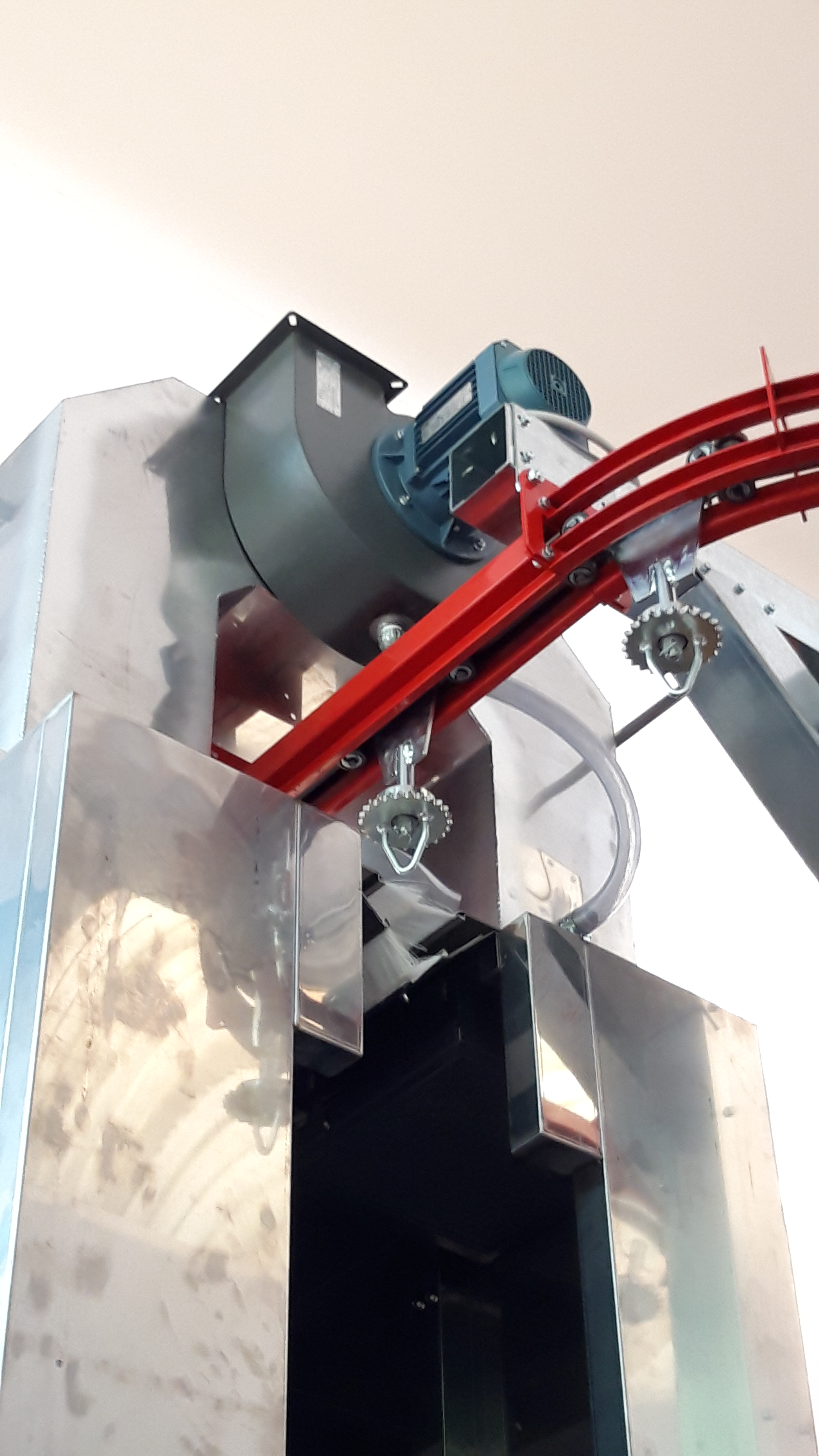
The extraction hood, made of stainless steel sheet metal, is fitted with a centrifugal fan unit driven by a three-phase electric motor. It is located above the tunnel, in the area where the components enter, and is designed to remove the mixture of air and water vapour produced during the treatment process.
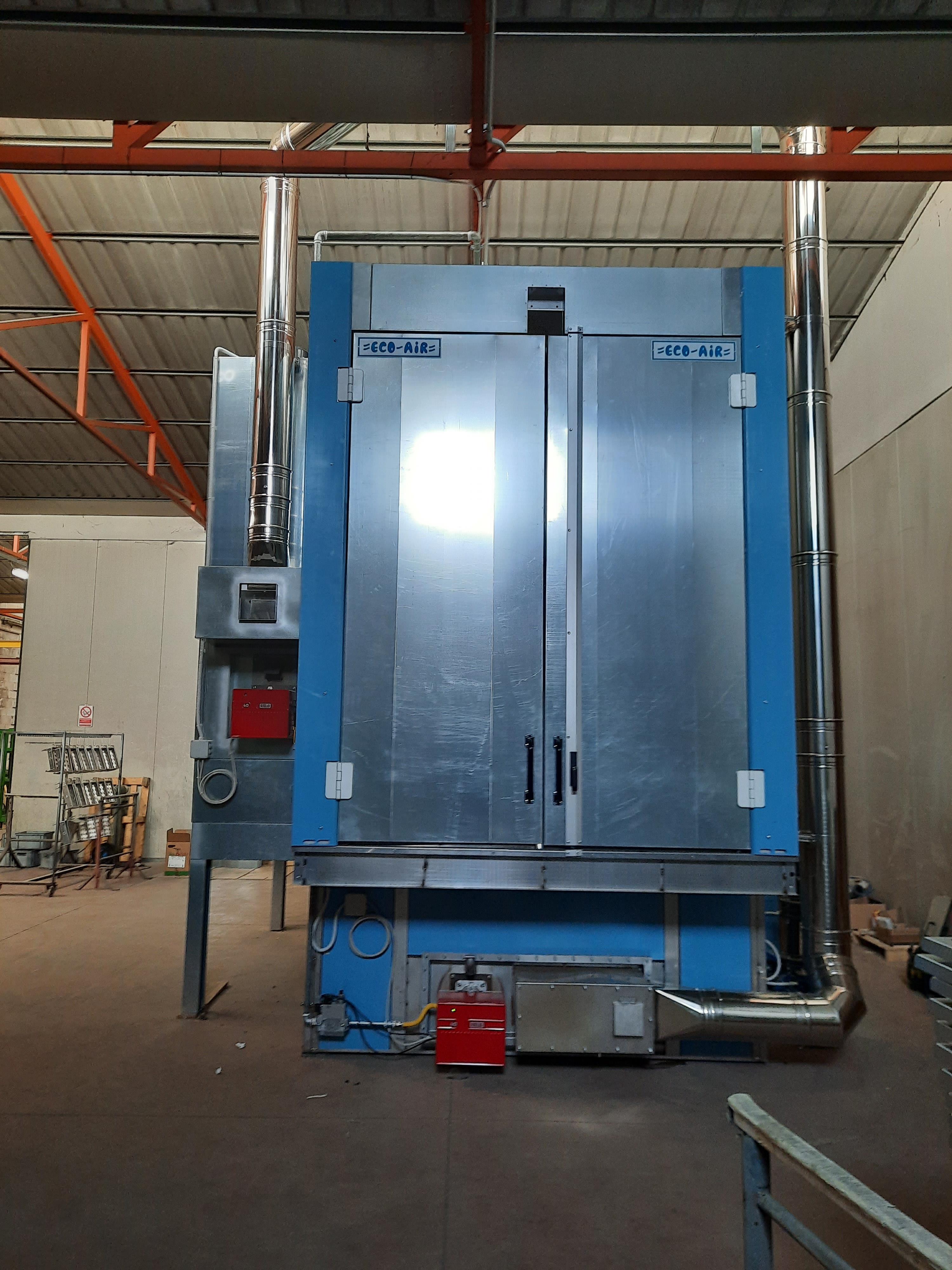
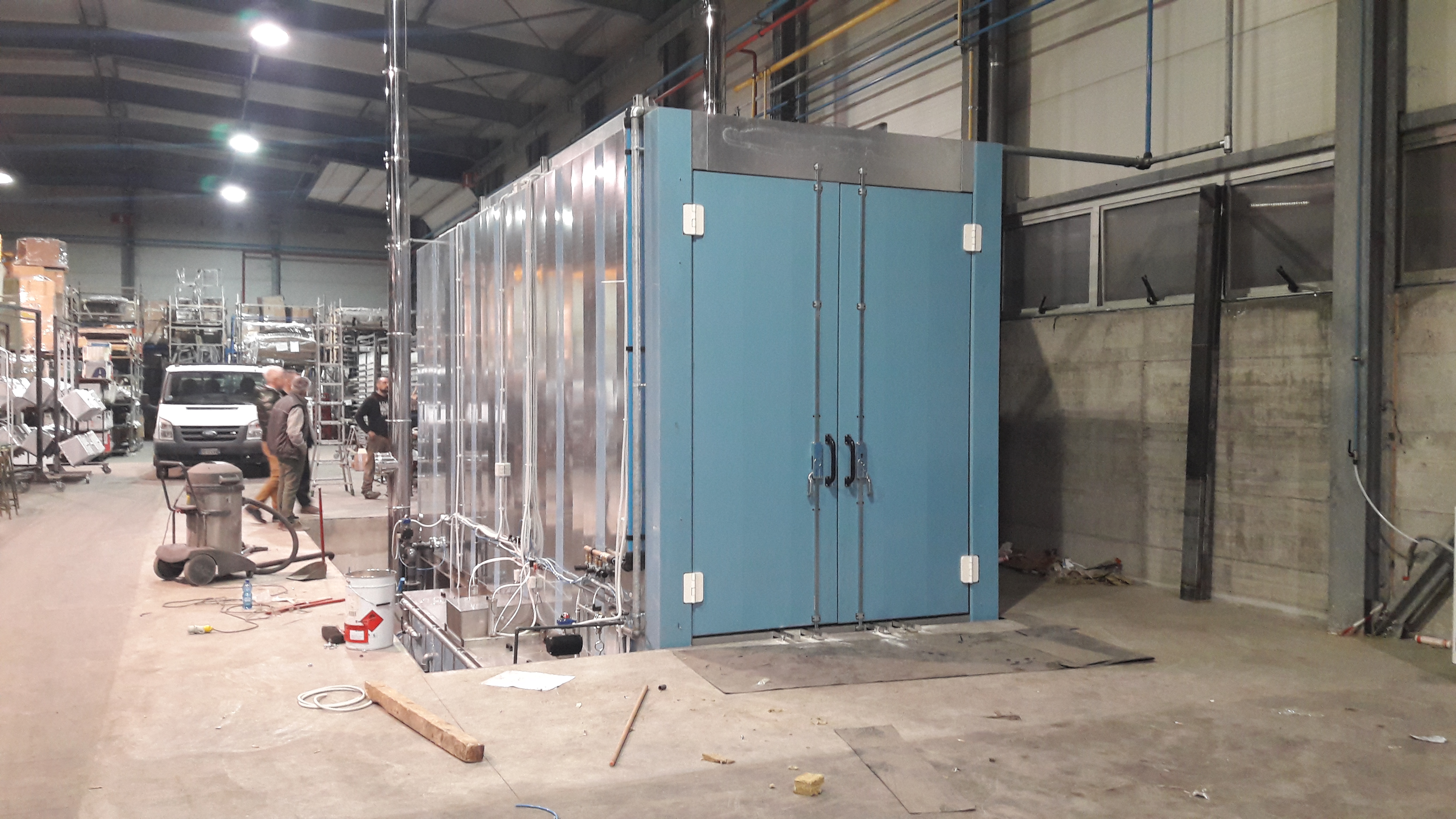
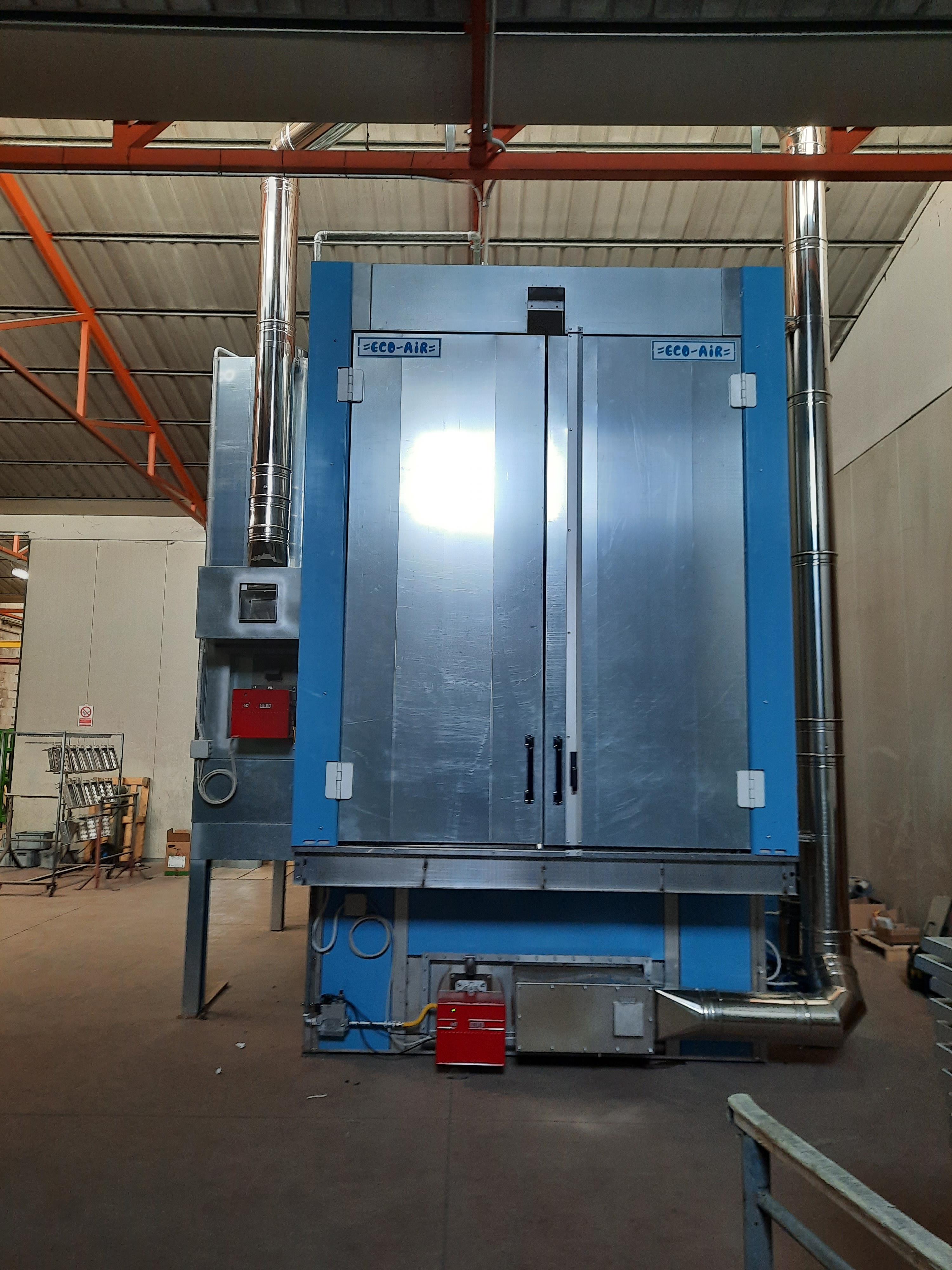
Liquid heating is managed through a preheater with a combustion chamber in AISI 304 or 316L stainless steel.
The immersion heat exchanger features a four-pass smoke tube system, ensuring high energy efficiency and up to 40% energy savings.
Assistance and support
Linea Eco Air provides a comprehensive service package that includes:- Free and detailed initial consultation
- Installation of the system
- Staff training
- Ongoing after-sales support to ensure efficiency at every stage of your coating process.
For further info, contact us!